Chess Middle Games

Just off the Beaten Path

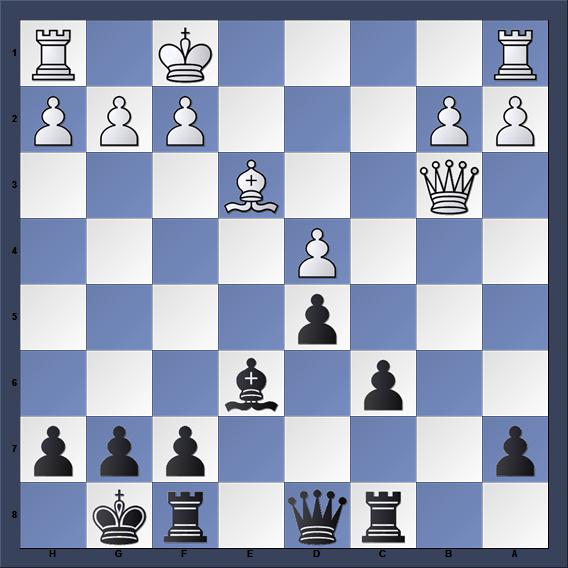
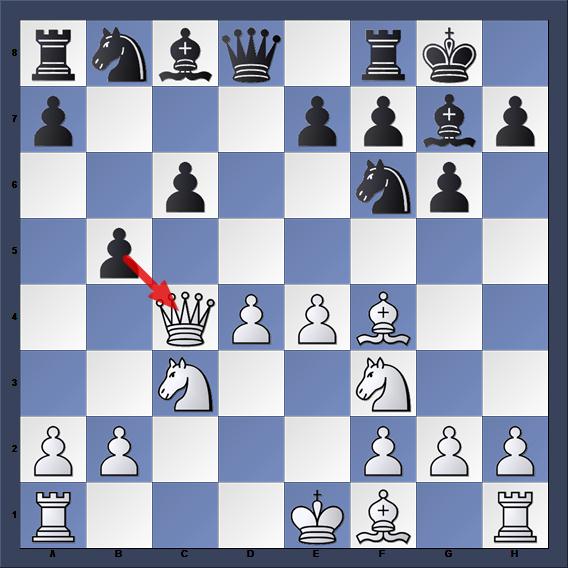
This is Gurgenidze versus Spassky, 1959. The opening is the Bird Defense to the Ruy Lopez. I like how Spassky acquits himself here. I’ve made some annotations, since I’m an aficianado of the opening. Spassky is one of my favorite players because it’s rare to see someone so skilled play sidelines not highly regarded by theory.

1. e4 e5 2. Nf3 Nc6 3. Bb5 Nd4 4. Nxd4 exd4 5. O-O c6 6. Be2 {The bishop can
go just about anywhere. I didn’t see this line in the MCO but white still
enjoys an advantage here.} (6. Bc4 h5?! {There is a creative Indonesian master
who plays this move reguarly. I adopted it immediately after looking at his
games. It leads to interesting play. It’s hard for white to get his queen and bishop into
the game. See the picture below.} 7. d3 Bc5 8. Nd2 d5 9. exd5 cxd5 10. Bb5+ Kf8 {Not Bd7 where white just has a superior endgame. This is a position that I reach a lot and like
very much. I like black’s space and the weakness of white’s light square
bishop. An attack on either wing is possible.})

6… Bc5 {The bishop isn’t so bad here. White usually plays c3 later.} 7. d3 Ne7 8. Nd2 d5 9. e5 {I don’t like this move. By occupying e5, a weak square, with a pawn white loses the
ability to put a piece there. The position is equal now.} Be6 10. Nb3 Bb6 11.
a4 a5 12. Bg4 O-O 13. Bg5 {The knight is misplaced on the queen wing.} Qd7 14.
Bxe6 fxe6 15. Bxe7 Qxe7 16. Qg4 Rae8 17. Nd2 Rf5 18. f4 Ref8 19. g3 Qb4 {Even
though the position is closed the knight isn’t necessarily superior to the
bishop. To get the knight in the game white will have to try a pawn break with
c4, or try to use the h3 square.} 20. Nf3 Bd8 21. b3 Qc3 22. Rac1 b5 23. Rf2
Qb4 24. Rcf1 bxa4 25. bxa4 c5 26. Nh4 Bxh4 27. Qxh4 Qxa4 28. g4 R5f7 29. f5 Qe8
30. f6 Rb7 31. g5 a4 32. Kh1 Ra7 33. g6 Qxg6 34. fxg7 (34. f7+ {!?} Raxf7 35.
Rxf7 Qxf7 36. Rxf7 Kxf7 37. Qe1 Ra8 38. Qb1 Kg6 {I like black here, but the
engine says that he’s lost. It’s hard for me to see how white can prove a win
here. Everything’s defended for black. I’m sure white must have seen this
continuation and rejected it.}) 34… Rxf2 35. Qd8+ Kxg7 36. Rxf2 Rf7 37. Rxf7+
Qxf7 38. Qg5+ {Perpetual check} *

Whether you like my pet line or not, I think we can both agree that the Bird Defense, with its doubled central pawns for black (nearly always), offers imbalances right away. Those of you who follow Silman’s approach to the game may appreciate the clearly drawn lines that the opening creates. Give it a try and let me know how it goes. It’s an interesting theme.
The Whole Board

This one is a bit of a stinker by any technical standard; it does feature several creative flourishes in the notes however, found afterward by the silicon genius. The lesson for today is short and simple: be situationally aware at all times, using the whole board. The hidden key to springing a tactic can often be found in a different quadrant than the one on which you’re focused. It is a Game 30 and I’m playing as black.

1. e4 e5 2. Bc4 Nf6 3. d3 Bc5 4. h3 O-O (4… c6 {Black can effectively play the white
side of the Italian Game in which h3 is useless.} 5. Nf3 d5 6. exd5 cxd5 7.
Bb5+ Bd7 8. Bxd7+ Nbxd7 9. Nc3 e4 10. dxe4 dxe4 11. Qe2 O-O 12. Ng5 h6 13.
Ngxe4 Nxe4 14. Nxe4 Re8 15. O-O Qh4 {Black has to be careful to make the most
of white’s knight problem.}) 5. c3 a6 {This wasn’t necessary; the real benefit
of a6 comes from being able to preserve the bishop from being exchanged for
the queen’s knight. White may choose Nd2-f1 instead and allow black to delay a6.}
(5… d5 {Both lines given here give black a great game.} 6. exd5 c6 7. dxc6 (
7. d4 cxd5 8. dxc5 dxc4 9. Qxd8 Rxd8) 7… Nxc6 8. Nd2 b5 {Exploiting the
weakness of the f2 square.} 9. Bxb5 Bxf2+ 10. Kf1 {?! Not markedly different
than capturing the bishop, though this is a bit unexpected.} Ne7 11. Kxf2 Qb6+
12. d4 exd4 13. cxd4 Qxb5) 6. Nf3 d6 7. Nbd2 Nc6 8. a4 h6 9. b4 Ba7 10. Bb2 Be6
11. b5 Na5 12. Ba2 Bxa2 13. Rxa2 {…Nh5-f4 is good here because the dark
square bishop is off its home diagonal. This one of the reasons the bishop
infrequently visits b2.} c6 14. bxc6 bxc6 15. Nh4 Nxe4 {Wins a full pawn.} 16.
Nxe4 Qxh4 17. Qf3 d5 18. Ng3 e4 19. dxe4 dxe4 20. Qh5 Qxh5 (20… Bxf2+ {! A
beautiful temporary sacrifice. One would need to see that f3 is under black’s
control. I considered it, because it’s forcing, but didn’t understand it’s
true value. The rook is shut out too.} 21. Kxf2 Qf4+ 22. Kg1 Qxg3) 21. Nxh5 c5
{The plan is correct, control c4, but there’s no reason to make two pawn
moves when the knight is immobilized.} 22. O-O c4 23. Re1 f5 24. Bc1
Rfd8 25. Ng3 g6 26. Bxh6 Rd3 {I thought to win a pawn here on c3 and secure a
passer. In my initial evaluation I underestimated his defensive resources.} 27.
Ne2 Nb3 28. Nf4 Rxc3 29. Nxg6 Kh7 30. Ne7 Kxh6 31. Nxf5+ Kg5 32. Nd6 {An
interesting sacrifice. White has many resources available despite being down
material.} e3 {I missed a resource and this is a blunder. I did see the knight
fork, but what I didn’t see was the ability of the a7 rook to interfere with
the plan.} 33. Ne4+ Kf4 34. Nxc3 exf2+ 35. Kf1 (35. Rxf2+ {Doesn’t even
warrant an exclamation mark, should have been easy to see for both of us.}
Bxf2+ 36. Kxf2 {White has two connected passers in the vicinity of his king.
This is tricky for black.}) 35… fxe1=Q+ 36. Kxe1 Re8+ 37. Kf1 Be3 38. Nd5+
Kg3 39. Re2 Rf8+ 40. Ke1 Bd2+ {Visions of checkmate danced in my head!} 41. Kd1
Rf1+ 42. Kc2 {It may be simpler to just win material with the pin…} Rc1+ 43.
Kb2 Bc3+ {? Bishops enjoy their checking distance too! What a terrible
blunder!} 44. Nxc3 Rg1 45. Re4 {?} Rxg2+ 46. Ka3 Kxh3 47. Rxc4 Nd2 48. Rc6 Rg3
49. Kb2 a5 50. Rc5 Rg2 51. Kc1 {?? Loses to the fork} Nb3+ 52. Kd1 Nxc5 53. Nd5
Nxa4 {!? Allowing yet another fork seems fitting somehow.} 54. Nf4+ Kg3 55.
Nxg2 Kxg2 56. Kc2 Nb6 57. Kb3 a4+ 58. Ka3 Kf3 59. Kb4 {Black must remember not
to get the pawn to the 7th rank before preparations are taken.} Ke3 60. Ka3 Kd3
61. Kb4 Kc2 62. Ka3 Kc3 63. Ka2 Nc4 64. Ka1 Kb3 65. Kb1 Na3+ 66. Ka1 Nc2+ 67.
Kb1 {Remember the bishop and knight endgame? The winning side must start by
controlling the corner.} a3 68. Kc1 a2 69. Kd2 a1=Q 70. Kd3 Qa6+ 71. Kd2 Qd6+
0-1


Put it in the Grimoire

“There were also less elevated spells such as to ‘put down fear or anger’ which involved writing a magic sign on a laurel leaf and showing it to the sun, saying ‘I call on you, the great god in heaven, [strong] lord, mighty… protect me from all fear, from all danger that threatens.'” – Owen Davies, Grimoire

I have been writing a cross-cultural literary comparison of occult knowledge all night, and I thought I’d take a break to play some chess. I don’t know if I’ve accidentally peeved a warlock during my research, but something made me want to play quite aggressively. If I ever feel this way again I’m bringing a laurel leaf or two to the tourney!

1. e4 c5 2. c3 e6 3. d4 cxd4 4. cxd4 Nf6 5. e5 Nd5 6. Bc4 Nb6 7. Bb5 (I’m not sold on this move since black would like to play a6 anyway)….a6 8. Bd3 Nc6 9. Nf3 d6 10. a3 {I’m out of book now. I’m also unsure about what to do I can either castle here or play a waiting move. I see now that this is slightly weakening and ought to have simply castled. I wanted to preserve castling, the best waiting move, for later since I couldn’t form a plan. The only piece I’m certain about is my queen’s knight, which must go to d2.} Qc7 11. Bf4 Be7 12. Nbd2 d5 {I believe that closing the position in this manner assists white. White’s pieces are better-placed. The game looks as if it will come down to a race on respective sides of the board. Sacrifices feature heavily in these positions.}

13. Ng5 { This launching maneuver does give up a center pawn. Perhaps this was a mistake since I don’t want the game to be opened.} Bxg5 14. Bxg5 Nxd4 {There is a decent amount of initiative for the pawn.} 15. O-O Qxe5 16. f4 {This is, as you can obviously see, a slip. When I calculated this line before white’s 13th, I failed to see the weakness on e3. There’s something to be said for rechecking your lines after the first few moves of a variation.}

16…Qd6 17. f5 e5 18. f6 gxf6 19. Rxf6 {? Bxf6 is beautiful. It exploits black’s loose pieces and king position. If black saves his rook the e-pawn will fall – as will his king before long. I didn’t see the threat to the rook and dismissed this line. Black’s queen is not in any danger.} Qc5 20. Kh1 {? I did not even see that I could have prevent the double check by interposing with the bishop.} Ne6 21. Rc1 Qd4 22. Nb3 {I am giving up pawns hoping that black’s queen, getting overzealous, will take on b3 and fall due to …Rxc8.} Qxb2 23. Rc2 Qxa3 24. Rxc8+ {I had this plan (a bad one, I’m seeing now) and thought that after sacking some pawns black’s queen would be offsides. In fact it’s eminently defensible for black. The subtlety is tough to see, we both missed it. Black has to recapture with the knight to take the sting out of the second exchange sacrifice. A knight hopping to e7 should break up white’s attack.} Rxc8 25. Rxe6+ fxe6

26.Qh5+ Kd7 27. Qf7+ Kc6 28. Qxe6+ {?? It’s seductive, but it loses. The queen
will seize black’s third rank and black will survive. Necessary was Be7! to
kick the queen first. I missed the simple mate on d6 that’s necessary to
evaluate the position properly. I believed the queen could go to b2 without
issue.} (28. Be7) 28… Qd6 29. Na5+ Kc7 30. Qf7+ Qd7 31. Qf6 {This is an
improvisation. I had planned to play Be6 but that is losing. I’m glad
alternatives exist. Try not to make it up as you go…} Rhf8 32. Qxe5+ Qd6 33.
Qg7+ Nd7 34. Be7 Qe6 35. h3 {I don’t want to limit my pieces by having them do
guard duty for my back rank.} Rf7 36. Qb2 b5 {Black could have gobbled the
bishop, but I thought he might not. He was low on time and the attack will
still continue (albeit with a perfectly winning game for black).} 37. Bb4 Kb6 {
The king wants to go to the center of the board. His pieces offer greater
protection there then on the side.} 38. Qd4+ Nc5 39. Nb3 Qc6 40. Nxc5 {?! It’s
not so easy for white. The position is equal.} (40. Bxc5+ Qxc5 41. Nxc5 Rxc5 {
White has some good chances. Soon he may have conntected passers of his own.})
40… Kc7 41. Ba5+ Kd6 42. Ne4+ Ke7 43. Qa7+ {The simple Bb4+ was fine. This
attempt to win the rook is faulty. In severe time trouble don’t give yourself
tactical headaches.} Kf8 44. Bb4+ Kg8 45. Qd4 Qc1+ 46. Qg1 {My opponent has
about ten seconds left.} Qf4 47. Nd2 {? I have about thirty seconds left so I
think I’ll start hanging pieces now.} Rc1 48. Qxc1 Qxb4 49. Qc8+ Rf8 50. Bxh7+
{? This attempt to deflect the king doesn’t work either. The rook is defended.}
Kxh7 51. Qd7+ Kh8 52. Qxd5 Qb1+ {? White drops his queen.} 53. Nxb1 Rf1+ 54.
Kh2 1-0


An Olympic Blunder

A great many chess games end without displays of brilliancy. These unmemorable struggles get filed in the back of our brains where we put irrelevant data. Today I recalled the difference between a eukaryote and a prokaryote, after someone walking by had hummed a few bars of Cypress Hill’s “Insane in the Membrane.” It’s all still up there unless you let your brain, like an inept housemaid, re-sort all of your things. Do not let your bad chess, or your opponent’s bad chess, get sent to the recesses of your mind. There are hidden lessons in the blandest of games. When you make a mistake because of your opponent’s mistake you truly didn’t understand his mistake. All clear? Here is an example:

My opponent here dropped a knight in  a game that was sloppy and non-theoretical. He probably saved us some time and a few headaches. What went on in this game? It took twenty minutes and nobody had any fun. Let’s get something productive out of this amateurish outing.

1. d4 Nf6 2. Nc3 {This belongs to a family of queen pawn openings where white
does without his c-pawn. It’s played occasionally at a high level. Nobody
studies the defense from the black side so it’s easy to get caught not knowing
what to do.} d5 (2… e5 3. dxe5 Ng4 4. Qd5 Nc6 5. Nf3 Qe7 6. Bf4 Qb4 7. Qd2 {
The attempt at transposing into a Budapest Defense fails. White’s c4 weakens
his dark square but here he has not played it.}) 3. Bf4 Bf5 4. f3 {This is
premature. It helps to control the center but some of the central push’s venom
is gone since I have time to prepare.} g6 5. g4 Bd7 6. e4 c6 {? I needed to
capture the pawn. I thought I would play in hypermodern fashion here and
provoke white’s pawns forward to weaken them. He seems all too willing, but
space is a funny thing. You don’t know how much room you need until you have
too little.} 7. e5 Ng8 8. Qd3 {Nobody has a plan. This is more dangerous for
the attacker since the burden belongs to him. Evaluations bounce back and
forth over the next twelve moves.} f6 {Not fearing the pin on the knight after
a recapture. Bf6 solves that problem. More troublesome is that the weakness
I’ve generated doesn’t actually help. He can simply keep the tension in the
heart of my position and recapture with his queen when I capture.} 9. exf6 Nxf6
10. Be5 Bh6 11. Be2 {Beware of developing moves that don’t actually help you
at all. White simply passed his turn.} O-O 12. h3 Qb6 {This is a waste of time.
C5 is important as I see no great way to get rid, or make use of, the queen
bishop.} 13. f4 {It wouldn’t be the end of the world except white needs to pay
attention to e4. He soon forgets about the comfortable roost he’s given black.
The king’s knight becomes quite powerful. It’s definitely a ram and a lever.}
Bg7 14. Na4 Qb4+ 15. c3 Qxa4 {It’s hard to say what white was thinking.} 16. b3
Qa6 17. Qc2 Qb6 18. Nf3 Bc8 19. Nh4 Nbd7 20. f5 Nxe5 21. dxe5 Ne4 22. fxg6 Qf2+
23. Kd1 Qxh4 {There’s not much to this. White misses a tactic.} 24. gxh7+ Kh8
0-1


Redoing your Own Analysis

This is a thirty minute game in which I’m playing white. I am going through some of my old games to see how my analysis now compares to my analysis then. It seems to be a mixed bag. I make different mistakes than before, but there just as many gross errors. I recommend doing this to see how many moves from your old games you remember. Every game that doesn’t end in a draw has an inferior move in it somewhere. Don’t make the same one twice!

1. e4 c5 2. c3 {The c3 Sicilian is a good choice for white to avoid the Open
Sicilian. Unless you’re a professional chess player you stand a good chance of
having to discover a move in the latter that cannot be pieced together over
the board.} Nc6 3. Nf3 d6 4. d4 cxd4 5. cxd4 e6 {I enjoy a modest spacial
advantage. I do not have to attack black’s king and this setup has some
flexibility.} 6. Be2 {The bishop should go to d3 instead, a more active square.
Be2 is for attacking the king and defending a bishop on e3 against the king’s
knight.} Nf6 7. Nc3 Be7 8. Be3 O-O 9. h3 {d5 was also fine where the knight
gets ejected and I can control the c-file} a6 10. a3 {This is just a waiting move.
Although I know that this is no more correct than black’s last move, I want to
see how he’ll commit his pieces before I tip my hand.} Qc7 11. O-O b5 12. b4 {I’ve
decided to defer to black about how he’d like to strike in the center. I can
then choose to closer or open the game.} Bb7 13. Rc1 Rfc8 14. d5 {Wins a pawn}
exd5 15. exd5 {Nxd5 was an exceptional move that I did not see. The knight, at
the end of the variation, will be uncomfortable on c3. If white forces the
knight trade the newly won d-pawn is easier to defend.} Ne5 16. Nxb5 Qd7 17.
Nc3 Rc7 18. Bb6 Nxf3+ 19. Bxf3 Rc4 20. Qd3 {With the plan to trap the rook…
which doesn’t actually work.} Rac8 21. Bc5 {?} Rxc3 (21… dxc5 {! Even more
crushing} 22. Qxc4 cxb4 23. Qb3) 22. Rxc3 dxc5 23. bxc5 Rxc5 24. Rfc1 Rxc3 25.
Rxc3 Nxd5 {Allows me to win the knight. I have all the time I need to
reorganize. The dark bishop cannot help in the defense of the piece. The pin
will endure!} 26. Bxd5 {? Not noticing the strategic idea} Qxd5 27. Qxd5 {?
Thinking that I have an easy backrank mate.} Bxd5 28. Rc8+ Bf8 {! The two
bishops should be able to win easily.} 29. Rd8 {I plan to harass the bishop
vertically until it goes to b5, and then I’ll play a4, trading the pawns. I
feel more comfortable with the pawns all one side. Of course, if I keep these
pawns on the board I have double the chance to trade down to a wrong bishop
endgame…} Bc4 30. a4 f6 31. Rc8 Bd3 32. Rd8 Bc4 33. Rc8 Bb3 34. Ra8 Bxa4 35.
Rxa6 Bb5 36. Rb6 Bc4 37. Rc6 Bf7 38. Rc8 g6 {Black must break out of his box
to make progress} 39. f3 Kg7 40. Rc7 f5 41. g4 fxg4 42. hxg4 {I like fxg4
better in retrospect because I am not playing for a win. I’d like to deny
black a passer.} Bd6 43. Rd7 Bf4 44. Kg2 Kf6 45. Ra7 h5 {? =} 46. Ra6+ {Not
the best but a neat trap} (46. gxh5 {Speaking of wrong bishop endgames, here
we are! I forgot about my plan.} gxh5 47. Rxf7+) 46… Kg5 47. Ra5+ Kh4 48.
gxh5 gxh5 {? More than I hoped for!} 49. Rf5 Be6 50. Rxf4+ Kg5 51. Kg3 {
Perhaps black should try to put pressure on the f-pawn.} Bd7 ({Fritz 12:} 51…
Bd5 52. Rb4 h4+ 53. Kf2 Be6 54. Ke3 Bf5 55. Rb2 Bd7 56. f4+ Kf5 57. Rh2 Kg4 58.
Rg2+ Kf5 59. Rg5+ Kf6 60. Kf3 h3 61. Rc5 Kg6 62. Kg3 Kf6 63. Kh2 Bf5 64. Rc6+
Be6 65. Ra6 Kf7 66. Rb6 {1.83/22}) 52. Rd4 Bc8 53. Rd5+ Bf5 54. f4+ Kf6 55. Kh4
Bg4 56. Ra5 {It’s a better defense to move the bishop over and over. Allowing
me Kg5 makes my job easier.} Ke6 (56… Bd1 57. Kg3 Bg4 58. Rg5 Bd1 59. Kf2 Bg4
60. Ke3 Bd1 61. Rd5 Bg4 62. Ke4 Be2 63. Rd6+ {This is the only way. Notice how
white’s king and rook work together to deny black the diagonal he needs.}) 57.
Kg5 Kf7 58. Ra6 Kg7 59. Ra7+ Kf8 60. f5 Ke8 61. f6 Kf8 62. f7 {? Looks good
but the pawn will drop!} Be6 {?} (62… Kg7 63. Rb7 Be2 64. Rd7 {Using Zugzwang
} Bc4 65. Kxh5 Bxf7+ 66. Kg5 Kg8 67. Kf6 Bh5 68. Rg7+ Kh8 69. Rg3 Be2 70. Rc3
Kh7 71. Rh3+ Kg8 72. Re3 Bd1 {The king is in the right corner}) 63. Kf6 Bxf7
64. Rxf7+ Ke8 65. Rh7 h4 66. Rxh4 Kd7 67. Rh5 Kd6 68. Re5 Kd7 69. Re6 Kd8 70.
Re7 Kc8 71. Ke6 Kd8 72. Kd6 Kc8 73. Rd7 Kb8 74. Rc7 Ka8 75. Kc5 Kb8 76. Kb6 Ka8
77. Rc8# 1-0


The Value of Efficiency

Here is an unrated chess game I played against a player, “QuantumMan” on Chess.com. I play him regularly and score just over 40% in our games. We engaged in a a friendly debate about the value of efficiency in choosing a path to victory; it turns out we were both quite mistaken about the lines we picked in this instance, but, the fact remains that there is more than one way to win a chess game. Will you for the saucy method and accept a small risk of not getting the full point? Or will you play easy lines that don’t grind your opportunity into find power but guaranty, as much as anything can truly be expressed with certainty, that you will win the position? You’ll see from our game below that both actually carry implicit risks; the promise of positional power that your rook on the 7th rank grants may come to naught, but your calculations can also be your own undoing.

After our debate an engine revealed that not only was my idea for 30. f3 not a forced win, not in any line, but many of “QuantumMan’s” lines were fraught with opportunities for resistance. In fact his advantage was slight after move 32. His ideas were somewhat dependent on my screwing up, and I quickly obliged him when I played Bxh2. As white we would’ve both played our respective lines and won, as it turns out from the postmortem, but we overestimated ourselves. To calculate fifteen lines deep means not assuming your lines forced – in fact my flashy continuations meant nothing after some early deviations from black.

Human beings are terrible at assessing risk, and we might not be around if this were not so. Emerging from the  early Pleistocene Era wasn’t easy, and people subjected themselves to danger each and every day. Hunting sabre-tooth tiger with crude weapons is probably never a rational idea, and you’d be less inclined to do it the more you’d consider the idea. I personally don’t care if the world is covered in giant glaciers because I have automatic seat warmers, but I digress. What I want you to examine is which route you would have taken after black’s 29th. Remember, as novices we make the wrong move far more often than we make the right one; when we think of carrying our calculations out for fifteen moves we have to consider the possibility, usually a small one, that we’re actually right.

1. e4 e5 2. Nf3 Nc6 3. Bb5 Nf6 4. Qe2 Nd4 5. Nxd4 exd4 6. d3 c6 7. Bc4 Bc5 8.
Bg5 Qa5+ 9. Nd2 O-O 10. O-O d5 11. Bxf6 dxc4 12. Nxc4 Qb4 13. c3 dxc3 14. bxc3
Qa4 15. Bh4 Be6 16. Nb2 Qa5 17. d4 Bb6 18. Be7 Rfe8 19. Bb4 Qg5 20. Nc4 Bh3 {
? Qb5 was better, with the pin of the knight to the queen.} 21. Qf3 Bg4 22. Qg3
Bxd4 23. h3 Rxe4 24. cxd4 Rxd4 25. Bd2 Qc5 26. Be3 Be2 27. Bxd4 Qxd4 {White
has the subtle Nd6 where black can only get an exchange. He is losing.} 28.
Rac1 Bxc4 29. Rfd1 Qe4 30. Re1 Qd4 31. Rcd1 Qb6 32. Qe5 Be6 33. Rb1 Qa6 34. Qc7
Bxa2 {Anti-positional and terrible} (34… b5 {White must offer the pawn on a4
to keep his advantage, a tricky find. It was a key to the position neither of
us found.}) 35. Rxb7 Bd5 36. Rb8+ 1-0


The Autumn of the Patriarch

Over the weekend the vultures got into the palace by pecking through the screens on the balcony windows and the flapping of their wings stirred up the stagnant time inside, and at dawn on Monday the city awoke out of its lethargy of centuries with the warm, soft breeze of a great man dead and rotting grandeur –  Gabriel Garcia Marquez

Autumn of the Patriarch focuses on a leader’s last days; his life, once a blend of grand gestures and sensuality, comes to nothing but disorder. A cow holds court from the presidential balcony. The battlefield squalor inside the palace seems to embody the spontaneity of a coup, but even the dead dictator knows that gross misjudgments foreshadowed his difficulty. So regarding this incarnation of your king, what will be the true anatomy of his disaster as you will tell it later? Here’s mine. I’m playing against Justin Armstrong, 1670 USCF, in a Game 60. I am white and the text is below.

The Autumn of my Patriarch


1. e4 e6 2. c4 {An intriguing system that often leaves white no worse than ina normal French. Some choose not to play d5 at all and white keeps good chances. I also play the Maroczy Bind against the Sicilian. I like to play similar pawn structures.} c6 3. d4 d5 {E5 is good here. White gets a slightly better French Advance. The c5 break will take two moves for black. Black may have to take on the isolani as well.} 4. cxd5 exd5 5. exd5 Nf6 6. Nf3 Be7 7. Nc3 Nxd5 8. Bc4 {The wrong place for the bishop. Bd3 is thematic in such structures because e4 and c4 lack pawn cover. I’m hoping that black changes the pawn structure and would like to induce him to do so.} Bg4 9. Nxd5 (9. Qb3Bxf3 10. gxf3 O-O 11. Qxb7 {I failed to asses this as good for white. I am usually too paranoid to scoop up a b-pawn.}) 9… cxd5 10. Qa4+ Nc6 11. Bb5 Bd7 12. Ne5 Bb4+ 13. Kf1 Nxe5 14. Qxb4 Nc6 15. Qe1+ {It’s better to stay put. White will soon lag in development.} Be6 16. Qc3 {Yet another queen move. The lady is fickle.} O-O 17. Bxc6 Rc8 18. Qb3 bxc6 19. Be3 {The rest is immaterial. Bad governance has rotted the position from within. Multiple queen sorties and the arrogant king move leaves white struggling. Do not cause yourself problems you have no inkling of how to fix!}

There is some good news though. Like the composite rulers in the novel, the king seems to embody eternity, so does he rise from the box without wound or memory.

Game Two

This is a pretty interesting game. White, played by Robert Chen, is a 1600-something player and appears to be pretty solid. The time control was 40/2 plus an hour for sudden death. The evaluation is even for a good portion of the game, but black underestimates white’s attack and presses onward with a poor plan.

1. d4 d5 2. Bf4 Nf6 3. Nf3 e6: The London System is pretty uncommon around my area, much more so than in other locations. It’s an excellent choice, but because I’ve devoted little time to it I know only the very basics.

4…Ng5!? This isn’t such a poor try; white doesn’t have h3 in yet and he’ll probably miss his dark-square bishop. In the London-proper he will put his pawns on dark squares which will mitigate the weakness left by the missing piece. My opponent told me later he was planning to play h3 on the next move. 5. Bg5 is more accurate than 5. Bg3 as white can keep a small advantage. It’s not very theoretical.

5. Bg3 (5. Bg5 Be7 6. Bxe7 Qxe7 7. c4) 5… Nd7 6. Ne5 Nxg3 7. hxg3 Nxe5 8. dxe5 c6 9. Nd2 Qc7 (9… Qb6 {White is obliged to protect the weak b2 square since his dark-square bishop is gone. I

ruled this out because it wasn’t clear to me what the queen’s aim was. Perhaps
that it prevents an easy f4 is good enough.}) 10. Nf3 Be7 11. c3 Bd7 12. a4 a5
13. Qc2 h6 14. Be2 b5 15. axb5 cxb5 16. g4 f6 {This is a positional mistake. I
didn’t realize the difficulty presented by the queen with my weak light
squares. I thought I would be able to evict the queen with my useless
light-squared bishop. Better was b4, activating the lazy bishop.} 17. Qg6+ Kf8
18. exf6 Bxf6 19. g5 Bxc3+ 20. Kf1 Bxb2 21. Rb1 Qc3 {The queen and bishop are
redunant so this “takes a piece off.” A closer inspection reveals that
white’s threat is empty.} 22. Nd4 a4 {I looked at the rook lift but though I
could bring my plan off more quickly…} 23. Rh3 a3 24. Rf3+ Ke7 25. Rf7+ Kd6
26. Rxd7+ Kxd7 27. Qxg7+ Kc8 28. Qxh8+ Kb7 29. Qh7+ Qc7 30. Qxc7+ Kxc7 31.
Nxb5+ Kc6 32. Nxa3 Rxa3 {The wrong piece. Taking with the bishop allows access
to f8 with slim chances for black. This is better than the text.} (32… Bxa3
33. g6 Bf8) 33. gxh6 {1-0 I tried a few tricks but could not stop white’s
eager pawns.} 1-0


The Surgeon

You should read this piece by Atul Gawande, a surgeon who somehow finds time to write for The New Yorker, yet if I didn’t have tags on my shirts I promise they’d be worn backwards. Gawande’s seminal commencement address, delivered last month, pertains to the assessment of risk; his delineation between risky behavior and gambling is much more than linguistic hair-splitting; it has applications ranging far and wide, least of all for our favorite game.

Surgeons that use loose-fitting contingency plans lose fewer patients due to post-surgical complications than do their flatfooted peers. The less-successful surgeons are caught by surprise more often; they don’t seem to have as acute a perception of what defines risk. Their risks are actually gambles, defined by Guwande as a situation without recourse after failure. It is a “want all, lose all” approach that baldly ignores the real consequences of a bad outcome, perhaps because because human beings are famously terrible at estimation.

In the chess game below you’ll see a not-so-nifty knight sacrifice. If your opponent isn’t even aware that your most drastic move was a possibility, then the try is likely foolhardy.

The actual discussion that took place afterwards took no account of the sacrifice’s objective merits. You’d think I just finished reading Equus the way I mistreated that poor animal. I let him fly for two pawns and a prayer. My opponent and I focused on the decision making process and what led me to opt for the liquidation. There were still quite a few pieces on the board and material was virtually even. My king was safe. Still, I evaluated the position as losing. Is this enough?

That’s not coming today however. Much like I did when I allowed a ruthless passed pawn to my seventh rank, I’m going to drag this out a little longer than strictly necessary. You’ll hear my conclusions about how to think about losing, but I want you to think through the process of how a chess game goes from bad to worse until then. What are drawing chances and how do you prevent a game from reaching resignation territory? Should evaluation be framed in terms of a dynamic win/lose percentage, to better understand our own thoughts at the board?

1. e4 e5 2. f4 Bc5 3. Nf3 d6 4. c3 Nc6 5. d4 exd4 6. cxd4 Bb4+ 7. Bd2 Bxd2+ 8.
Nbxd2 Bg4 9. Bb5 Qf6 10. Qc2 Nge7 11. d5 a6 12. dxc6 axb5 13. cxb7 Rb8 14. Qxc7
O-O 15. f5 Qxb2 16. Rb1 Qf6 17. O-O Nxf5 18. exf5 Bxf5 19. Rb3 Rfe8 20. Re1 Be6
21. Rxb5 Qd8 22. Qxd8 Rexd8 23. a4 Rd7 24. Reb1 Rc7 25. a5 Bd7 26. a6 Bxb5 27.
Rxb5 Rc1+ 28. Kf2 Ra1 29. Rb6 Kf8 30. Rxd6 Ke7 31. Rc6 Kd7 32. Ne5+ Ke7 33. Rc8
Rxb7 34. axb7 Ra2 35. Ke3 Ra3+ 36. Ke2 Ke6 1-0


Grunfeld Defense, Russian System: Game in 30

This is a game I played on Chess.com today with an up-and-coming player. I thought it was good chess, yet we each missed golden opportunities. Both players saw better moves at the critical junctures but did not fully appreciate their value. Seeing good moves, even if you reject them, represents progress toward chess acumen. The time controls were thirty minutes and the game took place in the Russian system.

1. d4 Nf6 2. c4 g6 3. Nc3 d5 4. Nf3 Bg7 5. Qb3 dxc4 6. Qxc4 O-O 7. Bf4 c6 8. e4
b5 {I had never seen this move before but it is black’s best try against the
Russian System. It will lead to simple equality. In this particular game I
hoped to prove black overextended.}

9. Qb3 Qa5 (9… a5 10. Qc2 Bg4 11. Be3 Bxf3 12. gxf3 {White must incur a pawn weakness in order to avoid losing the pawn on d4 (though he would have plenty of play).}) 10. Bd3 Be6 11. Qa3 Qxa3 12. bxa3 Nbd7 13. Ng5 Ng4 14. Nxe6 fxe6 15. Be3 Nxf2 (15… a6 16. Be2 Nxe3 17. fxe3 c5) 16. Bxf2 Rxf2 17. Kxf2 Bxd4+ 18. Ke2 Bxc3 19. Rac1 Bb2 20. Rxc6 Ne5 {Putting direct pressure on the pawn fixes the rook. White might have some ideas about putting the rook on a5 to set up a sacrifice. White would like totrade his bishop for black’s superior knight.} 21. Rc5 Nxd3 {I think black should have kept the knight on its strong square.} 22. Kxd3 a6 23. Rd1 (23. a4 b4 {This variation concerned me, though I liked the look of white’s a4. As it turns out the b pawn is not that dangerous. Black’s fate is tied to his pawn, so white should further tie down black’s rook to a8 and do damage with his other heavy piece generic cialis online.}) 23… Bxa3 24. Rc6 Bd6 25. h3 Kf7 26. Ke3 e5 27. Kf3 {A feint towards the queenside. Black cannot push his pawns yet.} a5 28. Rd5 b4 29. Rb5 h5 30. Rbb6 Rd8 31. Ra6 b3 32. Rxa5 {?} (32. axb3 g5 {White is winning though the fight is uphill.}) 32… b2 (32… Bb4 33. Ra4 Rd3+ 34. Kf2 Rd2+ 35. Kg3 {A brilliant drawing line that neither player noticed.}) 33. Rb5 Ba3 34. Ke2 Rd4 35. Rc3 Rxe4+ 36. Kd1 Bb4 37. Rb3 Re1+ 38. Kc2 Re2+ (38… Bc5 39. Kxb2 Bd4+ 40. Ka3 e4 {It’s a theoretical draw after a rook exchange. A pawn and an advanced passer equal the exchange.}) 39. Kb1 Rf2 (39… Bd2 40. a4 Rxg2 41. a5 e4 42. a6) 40. R5xb4 Rxg2 41. Rxb2 Rg1+ 42. Kc2 {My opponent is in time pressure because I talk too much.} Rg2+ 43. Kd1 Rg1+ 44. Ke2 Rg2+ 45. Kf3 Rxb2 46. Rxb2 Kf6 47. h4 e6 48. a4 g5 49. a5 1-0


Scroll to Top