Chess set creation & production

The Future For Luxury Wooden Chess Sets

Classic Chess sets, such as the Staunton variety, tend to involve looking back into the past, as opposed to the future. We seldom think about what will become of our luxury chess sets, but it stands to reason that the really high quality and super luxury sets will hopefully remain treasured in your family for generations to come.

The issue facing fine luxury chessmen, and indeed all other luxury hardwood items is the ecological situation surrounding the woods used to make them. Ebony, Rosewood, & Red Sandalwood are the most commonly used woods and certainly some of the most desirable. Yet ever year the price of these woods goes higher as the socks run low and governments across the world impose restrictions on the further deforestation of these woods.

One issue we face is that the trees that bear these woods take many years to grow, indeed some can be over 100 years old when cut down and harvested. This means that any re planting schemes are extremely long term efforts that probably wont sure up any supply problems in the coming decades.

Already countries like India are trying to impose export sanctions on luxury hardwoods, countries like Brazil have completely banned the export of their precious rosewood much to the dismay of the luxury musical instrument industry. As pressure from the environmentalists mount, and governments bow down to the scientific consensus it’s realistic to assume that supply of luxury chess sets is going to shrink.

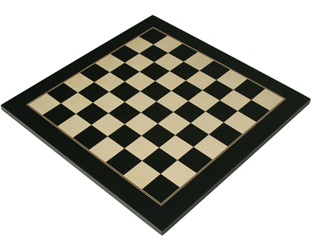
The UK’s most prominent online chess retailer is feeling the pain of this situation with the supply of their solid ebony chess boards. The boards come in a variety of sizes and are made from huge chunks of defect free black ebony. The results are quite stunning. Being the only retailer in the UK to offer such boards the demand is high, despite the very high price.

However obtaining enough stock to fulfil the orders is a constant challenge. Suppliers complain that it’s hard to source enough of the high grade woods and the prices are increasing every month. The costs of the wood are now scaring some wood workers out of using those woods through fear of making a mistake on a chess product and having to throw the item into the reject bin. Something that then pushes the overall price up further.

In the eyes of the consumer this situation isn’t having much of an impact yet. They can still buy excellent chess products at good prices, often artificially low at present due to failing chess businesses selling off stock cheap to maintain some cash flow. However this will be short lived and the days of being able to buy luxury wooden chess pieces at an affordable price will soon be behind us.

The only advantage to consider is that in future generations the finest chess sets made from the best grades of endangered hardwoods will increase in value and collectibility. One just has to look at the price of musical instruments that contain Brazilian Rosewood, in some cases they are worth thousands of pounds now! Given the price of classic antique chess sets these days it’s a fair assumption that the finest chessmen at today’s new prices will represent superb investment opportunities!
How they make those perfect chess pieces

When we see a supreme luxury set of chess pieces it’s often difficult to imagine just how much work has gone into producing it. There are many stages that the producer has to go through in order to end up with 32 perfect chess pieces that are good enough to attract the ‘luxury’ price tag.

Simple beginnings

A chess piece usually starts life as a solid block of hardwood that is cut roughly into an eight sided shape. It’s then put into a lathe and turned to it’s correct shape by pushing a very sharp blade against it. The blade is of utmost importance. It must be a perfect reverse of the desired shape and extremely sharp. The aim is to cut into the spinning wood without splintering the wood or leaving small hollows. Not something an amature can achieve very easily! The end result should be a perfectly formed chess piece albeit with a slightly rough surface.

Smoothing things over

The next job is to carefully sand the rough surface of the chess piece away. This is usually done with very fine abrasive paper. Then the piece is polished with a rotating buffer to remove the sanding marks. There are many stages to the sanding and polishing of a chess piece. Mechanical polishing combined with hard wax is used to create the desired effect.

A weight off your mind

Even the best style and quality of chessmen would be nothing without some weight inside them. The chess piece is clamped carefully and then a large hole drilled into the base. The hole is then filled with either molten lead or a steel disc. It’s vital that some room is left in the hole for some flexible filler. If the metal weight goes in with a tight fit it can cause cracking later on!

Covering things up

The base is then covered with either a felt circle or a piece of leather to cover up the weight and filler. After this a final stage of polishing takes place. It’s worth noting that during all of these processes each piece must be carefully checked. Defective or damaged pieces must be thrown out and replaced with a new one. On luxury chess sets it’s typical to turn around double the quantity you need in the knowledge that 50% wont make it through to the end of the finishing process without picking some damage of defect. Super luxury chess sets will often have minute tolerances of what can be considered acceptable, which can mean the pile of rejects is huge compared to the finished examples.

Ebony Chessmen

The classic look that chess players and enthusiasts love is the deep black of ebony wood for the dark chess pieces. When polished to a deep shine it looks so deep, so black, so Staunton! But Ebony is seldom this black by nature. It will often have streaks of dark brown running through it. It is common practice to stain the ebony jet black in order to create a uniform blackness.

Slumping Pound Sends Price of Chess Sets Soaring!

The global economic crisis is not exactly hot news at present. One of the biggest problems facing us in the UK is the decimation of our currency. The GB pound is not so much suffering but dead in the water at present. It seems every time Gordon Brown or one of his Socialist cronies open their mouths in public the value falls even further.

What has this got to do with chess sets you might ask? Well the Chess market in the UK relies on goods imported from other parts of the world. India, China, Poland, Italy. Irrespective of which country the sets come from the prices are going up!

It’s a tough time for chess retailers. Often accused of making huge margins by those with no business understanding. The reality at present is that margins are getting tighter, sales harder to come by and suppliers are seeking to sell their wares to other countries who’s currency is remaining strong.

Will this mean the end for some of the smaller chess retailers? or even the larger ones? Only time will tell but one thing is for certain… it doesn’t get much worse than this!

Why do chess pieces crack?

It can be a very sad sight, you have a stunning set of wooden chess pieces that were bought long enough ago for the warranty to have expired and in one of the pieces a huge crack is developing. This problem can affect sets from both sides of the price spectrum.

Anyone who knows about wood will tell you that wood will move and change shape over time. When it’s first harvested it is full of moisture, as it seasons this moisture decreases. During this process the wood can shrink, warp or move.

The idea behind wood working is to let the wood complete all of it’s moving and changing before you turn it into your desired object. There are however a few problems. Firstly there are two factors which affect the wood. They are temperature and moisture and the two go hand in hand. Heat the wood to a high temperature and you can expect to see moisture reduce, let the wood sit in cooler damp climes and expect to see the moisture increase.

Because most chess sets are made in one country, then shipped to another it can experience dramatic changes in temperature and humidity. Another factor involved is the weighting of the chess piece. Chess pieces are hollowed out at the base and metal weights inserted. In the old days they used to drill a hole, fill it with molten lead then seal up the base with a leather disc. Worries about the safety of lead caused a switch over to steel which was inserted in the form of solid discs.

In the beginning this caused a problem. The old lead method was quite ideal for the pieces because lead was soft, this meant that the wood could move, bend, and contract slightly and the soft lead inside would accommodate it. Hard steel however was less forgiving and if fitted too tightly inside the chess piece would mean that cracking was very likely.

This problem was solved by drilling a slightly larger hole in the piece than was actually needed so that the steel disc fitted loosely inside. A soft ply-able filler is then inserted around the steel to fill in the gaps and remove any gaps or movement. This meant that the wooden chess piece could move, bend and grow without the weight inside causing the wood to crack.

Despite these developments some cracking will still occur, wood is not a 100% stable material and a degree of change is to be expected in it’s lifetime. When buying fine chess pieces from a retailer ensure you choose one who offers a good replacement policy for any pieces that do crack. Just make sure you don’t start cracking up yourself if one or two of your pieces do.

Chess boards, the solid vs veneer debate

chess board

I was interested to read two very different policies from two rival chess retailing websites recently. It was in relation to the kind of boards they stocked. The first retailer makes quite a big deal about how all of their chess boards are made out of solid wood, no veneers present! They point out the benefits of having a solid board as opposed to a veneer one as being quite significant.

The other retailer stocks only veneer boards and makes a point about how they do this to help protect the environment. I am not going to conduct any research into the carbon footprint of a veneer board over a solid one. However given that the said retailer has piles of stock air frighted over every month I doubt that saving the planet is their true reason behind their stock of veneer chess boards.

In case you were wondering, a veneer chess board is constructed using a center slab of wood to which thin layers of wood are glued to each edge in order to give the board the appearance of being made using the layer wood, as opposed to the wood or material thats hiding inside. One benefit to this method is that a center core can be used that is 100% stable. MDF or ply wood wont bend or crack or move in different temperatures so using these for chess boards can make someones life much easier.

Of course no one would buy an MDF chess board, however cover it in a veneer of mahogany or maple and all of a sudden you have a decent looking chess board. While there is nothing wrong with this method the appeal of a board thats solid throughout is far greater. It almost seems less fake to have a solid board, it’s not pretending to be something it isn’t.

If you have ever bought a cheap chopping board thats made from wood you will understand what can happen to a piece of solid wood. Sometimes is just naturally wants to bend like a banana. The production of solid wooden chess boards would suffer the same fate if it were not for expert selection, seasoning and crafting of these boards. You can begin to see why they cost more than their veneered cousins.

There is also the subject of age to consider. While a veneer board might look great when it’s new can we expect it to fair so well after 20 years of use and the occasional meeting between a stone floor and it’s corners? A solid board is going to age gracefully and wear it’s knocks with pride while a veneer board is going to need plastic surgery and a helping of super glue to remain looking good into old age.

Weighted chess pieces

The mystery of weighted chess pieces is often a subject of great interest among chess enthusiasts. There is no doubt that a triple weighted king feels fantastic in the hands. Pick up the same chess piece in an unweighted version and you instantly notice a sense of inferiority. Even the best bud rosewood chess sets can feel cheap when they are lacking the weight.

The method that was traditionally used was to drill out channels in the base of the pieces and pour in molten lead. The lead would set solid then a leather or felt disc would be glued onto the base of the chess piece to cover the dual function of covering up the unsightly lead and also giving the pieces a nice soft base.

More recently however the process has been forced to change. Some purists might disagree with the current method but there are a number of good reasons why it’s done differently now. The main one being the huge increase in the cost of lead. The price has gone up significantly making it very expensive for chess set artisans to purchase it.

The other factor is the safety. Lead is very poisonous and the governments of developed countries won’t permit the import of products that contain lead, especially products that are toys or games and likely to come into contact with children.

Therefore the chess set makers have devised a simpler method which involves drilling circular channels and inserting rods of steel inside. They then have to pour glue inside to secure the steel inside the wood. Rattling chess pieces would certainly not be acceptable. The rods will perform an effective job at weighting the chess set. However steel is not as heavy as lead, therefore more will be required meaning more wood need to be drilled out.

The end result of this is that the old lead filled chess pieces are now a thing of the past. Like the sets made from illegal and endangered woods they may well become more valuable and collectible in the years to come.

Scroll to Top