Chess Openings

Game Two

This is a pretty interesting game. White, played by Robert Chen, is a 1600-something player and appears to be pretty solid. The time control was 40/2 plus an hour for sudden death. The evaluation is even for a good portion of the game, but black underestimates white’s attack and presses onward with a poor plan.

1. d4 d5 2. Bf4 Nf6 3. Nf3 e6: The London System is pretty uncommon around my area, much more so than in other locations. It’s an excellent choice, but because I’ve devoted little time to it I know only the very basics.

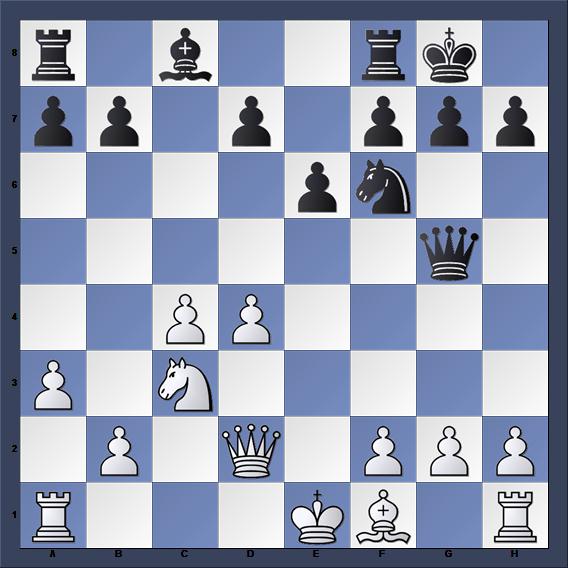
4…Ng5!? This isn’t such a poor try; white doesn’t have h3 in yet and he’ll probably miss his dark-square bishop. In the London-proper he will put his pawns on dark squares which will mitigate the weakness left by the missing piece. My opponent told me later he was planning to play h3 on the next move. 5. Bg5 is more accurate than 5. Bg3 as white can keep a small advantage. It’s not very theoretical.

5. Bg3 (5. Bg5 Be7 6. Bxe7 Qxe7 7. c4) 5… Nd7 6. Ne5 Nxg3 7. hxg3 Nxe5 8. dxe5 c6 9. Nd2 Qc7 (9… Qb6 {White is obliged to protect the weak b2 square since his dark-square bishop is gone. I

ruled this out because it wasn’t clear to me what the queen’s aim was. Perhaps
that it prevents an easy f4 is good enough.}) 10. Nf3 Be7 11. c3 Bd7 12. a4 a5
13. Qc2 h6 14. Be2 b5 15. axb5 cxb5 16. g4 f6 {This is a positional mistake. I
didn’t realize the difficulty presented by the queen with my weak light
squares. I thought I would be able to evict the queen with my useless
light-squared bishop. Better was b4, activating the lazy bishop.} 17. Qg6+ Kf8
18. exf6 Bxf6 19. g5 Bxc3+ 20. Kf1 Bxb2 21. Rb1 Qc3 {The queen and bishop are
redunant so this “takes a piece off.” A closer inspection reveals that
white’s threat is empty.} 22. Nd4 a4 {I looked at the rook lift but though I
could bring my plan off more quickly…} 23. Rh3 a3 24. Rf3+ Ke7 25. Rf7+ Kd6
26. Rxd7+ Kxd7 27. Qxg7+ Kc8 28. Qxh8+ Kb7 29. Qh7+ Qc7 30. Qxc7+ Kxc7 31.
Nxb5+ Kc6 32. Nxa3 Rxa3 {The wrong piece. Taking with the bishop allows access
to f8 with slim chances for black. This is better than the text.} (32… Bxa3
33. g6 Bf8) 33. gxh6 {1-0 I tried a few tricks but could not stop white’s
eager pawns.} 1-0


Grunfeld Defense, Russian System: Game in 30

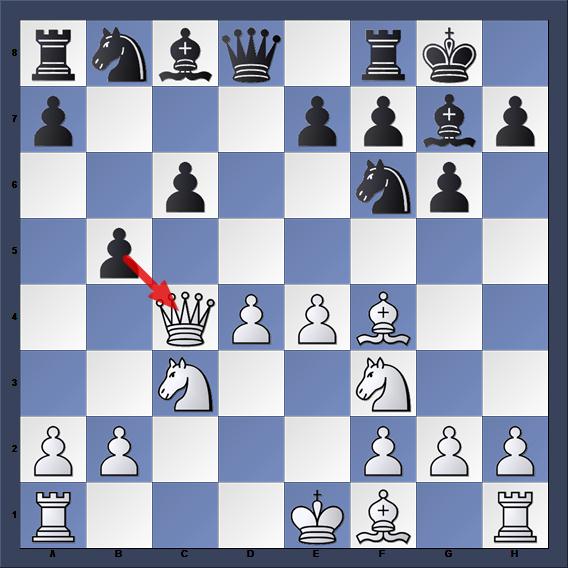
This is a game I played on Chess.com today with an up-and-coming player. I thought it was good chess, yet we each missed golden opportunities. Both players saw better moves at the critical junctures but did not fully appreciate their value. Seeing good moves, even if you reject them, represents progress toward chess acumen. The time controls were thirty minutes and the game took place in the Russian system.

1. d4 Nf6 2. c4 g6 3. Nc3 d5 4. Nf3 Bg7 5. Qb3 dxc4 6. Qxc4 O-O 7. Bf4 c6 8. e4
b5 {I had never seen this move before but it is black’s best try against the
Russian System. It will lead to simple equality. In this particular game I
hoped to prove black overextended.}

9. Qb3 Qa5 (9… a5 10. Qc2 Bg4 11. Be3 Bxf3 12. gxf3 {White must incur a pawn weakness in order to avoid losing the pawn on d4 (though he would have plenty of play).}) 10. Bd3 Be6 11. Qa3 Qxa3 12. bxa3 Nbd7 13. Ng5 Ng4 14. Nxe6 fxe6 15. Be3 Nxf2 (15… a6 16. Be2 Nxe3 17. fxe3 c5) 16. Bxf2 Rxf2 17. Kxf2 Bxd4+ 18. Ke2 Bxc3 19. Rac1 Bb2 20. Rxc6 Ne5 {Putting direct pressure on the pawn fixes the rook. White might have some ideas about putting the rook on a5 to set up a sacrifice. White would like totrade his bishop for black’s superior knight.} 21. Rc5 Nxd3 {I think black should have kept the knight on its strong square.} 22. Kxd3 a6 23. Rd1 (23. a4 b4 {This variation concerned me, though I liked the look of white’s a4. As it turns out the b pawn is not that dangerous. Black’s fate is tied to his pawn, so white should further tie down black’s rook to a8 and do damage with his other heavy piece generic cialis online.}) 23… Bxa3 24. Rc6 Bd6 25. h3 Kf7 26. Ke3 e5 27. Kf3 {A feint towards the queenside. Black cannot push his pawns yet.} a5 28. Rd5 b4 29. Rb5 h5 30. Rbb6 Rd8 31. Ra6 b3 32. Rxa5 {?} (32. axb3 g5 {White is winning though the fight is uphill.}) 32… b2 (32… Bb4 33. Ra4 Rd3+ 34. Kf2 Rd2+ 35. Kg3 {A brilliant drawing line that neither player noticed.}) 33. Rb5 Ba3 34. Ke2 Rd4 35. Rc3 Rxe4+ 36. Kd1 Bb4 37. Rb3 Re1+ 38. Kc2 Re2+ (38… Bc5 39. Kxb2 Bd4+ 40. Ka3 e4 {It’s a theoretical draw after a rook exchange. A pawn and an advanced passer equal the exchange.}) 39. Kb1 Rf2 (39… Bd2 40. a4 Rxg2 41. a5 e4 42. a6) 40. R5xb4 Rxg2 41. Rxb2 Rg1+ 42. Kc2 {My opponent is in time pressure because I talk too much.} Rg2+ 43. Kd1 Rg1+ 44. Ke2 Rg2+ 45. Kf3 Rxb2 46. Rxb2 Kf6 47. h4 e6 48. a4 g5 49. a5 1-0


The Ruy Lopez, the “Plan B” Variation

Every tournament player is familiar with the theoretical difficulties of the Ruy Lopez. Due to the sheer volume of preparation necessary, white occasionally runs into a system with which he is unfamiliar. White can easily transpose to quieter lines, usually after an early d3, with play that closely mirrors the quiet lines of the Italian Game and Four Knights. So it might be wise for those who want to defend the Spanish to learn a little about white’s back-up plan.

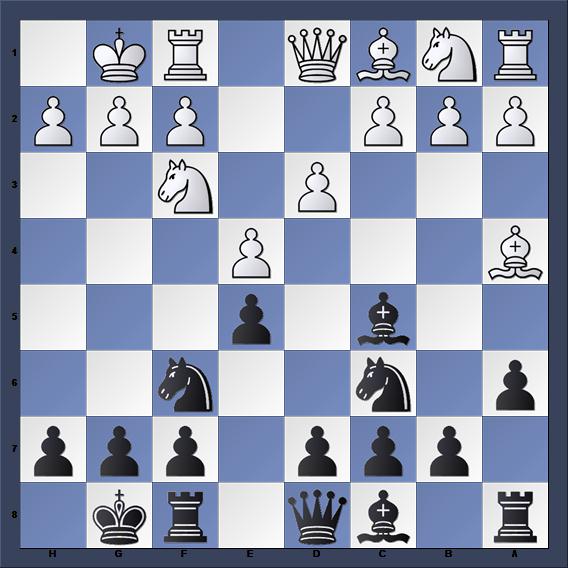
1. e4 e5 2. Nf3 Nc6 3. Bb5 a6. 4. Ba4 Nf6 5. d3! 5 Bc5 6. 0-0 0-0?

After 7 Nxe5 black does not have any compensation for the pawn. I discussed my game with my opponent afterwards, and we failed to find resources for black. Nxe5 is pretty obvious so why did I allow black to take the pawn?

I evaluated the position incorrectly. I believed that the bishop pair would be worth .3 and my extra development would make up for the pawn. There’s something inherently subjective about the scientific approach to chess; it’s easy to find things to confirm what you’d like to be true. I put myself in a bind here. The extra central pawn is just incredible for white. Evaluating the pawn as worth one was a mistake; it is worth about 1.3. It’s not just a pawn, but a critical offensive and defensive resource.

Better is 6. d6 where black has an Italian Game with a free a6, allowing the bishop to burrow in on a7. The white bishop does not attack f7 and will need to be rerouted, perhaps to c3. The dynamism in normal Spanish positions just isn’t here for white.

The best try is 7. Nc3 b5 8. Bb3 0-0 Bg5 h6 Bh4 Bg4 where it’s tough to make progress. Each sides wants to get rid of its f-pawn and play along the semi-open file. The lack of open files lends itself to minor piece exchanges; the endgames that result from this structure tend to feature the heavy pieces, and thus are pretty forgiving. If black take the knight on f3 he may consider castling on the queen wing, since it will be imperative for him to keep the game closed.

One creative try is to for black to oppose bishops on e6 after white tries to open the f-file. White will either capture and give black an open f-file, or will open a file for black’s queen-wing counter offensive. Only oppose bishops after white has declared his intention to play on the f-file, since otherwise the semi-open a-file is worth more to white than his pawn weakness is to black.

Both sides are headed for a strategic struggle on the wings. Breaking in the center concedes space for the side initiating the exchanges and is generally unwise.


Working on the Nimzo-Indian Defense: Part One

Many players choose to face the Queen’s Indian rather than the Nimzo-Indian, delaying Nc3. I like the strategic positions of the Nimzo and I know I’ll need to learn them anyway; the sooner the better. I’ve picked up David Vigorito’s Challenging the Nimzo-Indian and I am very impressed. I didn’t have to read very far before I found a variation for which to aim; it will be a sort-of road map as I learn the defense. I always start my preparation by learning the theoretical endgames emerging from a particular position.

1. d4 Nf6 2. c4 e6 3. Nc3 Bb4 4. Qc2 O-O 5. a3 Bxc3+ 6. Qxc3 b6 7. Bg5 Bb7 8.
f3 h6 9. Bh4 d5 10. e3 Nbd7 11. cxd5 Nxd5 12. Bxd8 Nxc3 13. Bh4 Nd5 14. Bf2

Position after 14. Bf2

So I plan to play this endgame in correspondence chess until I can become proficient in it. This may seem silly, what’re the chances I’m going to get to this position when it’s fourteen moves deep? Yes, there are other options for black, but the thematic queen trade comes up in lines after 8…c5 as well.

Another reason I’ve chosen this approach is that takes advantage of 4. Qc2, which provides me a way to avoid structural weaknesses. White has some choices about which type of game he wants to play. Black will have to play on my terms and challenge me in an endgame.

Admittedly I’m still developing an understanding of the position. I’m looking at black’s fourth-move alternatives to 4…0-0.  I’m starting with c5 because it is the most common. Here’s what I expect to see a lot:

4. Qc2 c5  5. dxc5 (forced, since white will lose the first-move advantage if he plays defensively, to support his pawn.)

5…O-O 6. a3 Bxc5 7. Nf3 Nc6 8. Bg5 Nd4 9. Nxd4 Bxd4 10. e3 Qa5 11. exd4 Qxg5 12. Qd2

Position after 12. Qd2

The lines after 4…d5 resemble those of the Ragozin System, which I face as a Queen’s Gambit player. There shouldn’t be anything new there. After learning the main lines I’ll focus on the sidelines. I’ll repeat the same strategy after each subsequent move, with an eye towards favorable endgames. We’ll learn a little bit more in future installments of this series.


Scroll to Top