European Women’s Championships

I’d like to take  a break today to share with you some news from the European Women’s Championships. The tournament is halfway to completion already. It’s being held in Turkey this time around. Right now French GM Marie Sebag has a share of the lead with Cristina-Adela Foisor after the latter scored a draw in her last round. The game I want to present to you shows two top-level female players from the tournament in their best form. The analysis from Chessbase.com was very sparing so I’ve added some of my own.
1. d4 d5 2. c4 c6 3. cxd5 cxd5 4. Nc3 Nf6 5. Bf4 We have one of the many ways to transpose to the Slav Exchange. Unlike many other variations which carry the ‘exchange’ label this one is anything but quiet. It does draw often but not without some fireworks first. It is not as theoretical as the theory-laden Slav mainlines however and this makes it a good choice.
6. e3 Bf5 7. Rc1 e6 8. Qb3: Normally this move would be used to punish black for a premature Bf5, but here the other queen can help defend the weak square on the b file. Otherwise it would be uncomfortable.
Bb4 9. Bb5 O-O 10. Bxc6 An interesting decision to force a breaking of the symmetry.
Bxc3+ 11. Rxc3 bxc6 12. f3: Wanting black to exchange since a fork is threatened with g4. With a retreat g4 will still start an attack on the kingside.
Nh5 13. Ne2 Nxf4 14. Nxf4: White’s coming endgame will be slightly better  here due to black’s pawn structure and remaining minor piece.
Rb8 15. Qa3 Rb5 16. Rxc6: Black has to make something happen or white will have an easy draw if she wants it. This pawn sacrifice is enterprising but black doesn’t get enough compensation.
Qb8 17. b3 e5 18. Ne2: White doesn’t want to either open the game or centralize her opponent’s queen.
Bd3 19. Qd6 Qe8: Black can’t settle for Bxe2 here because the endgame afterwards is a simple loss. Better to play aggressively because the queen exchange would effectively end the game.
20. dxe5 d4 21. exd4 Qa8 22. Rc7 Rd5 23. Qe7 a5 (See the diagram to the right for a tactical puzzle. White can win here. Pay attention to the battery facing black’s king.)
24. e6 Rf5 25. Qd6 fxe6 26. Ng3 R5f6 27. Nh5 R6f7 28. Rxf7 Rxf7 29.
Kd2 Bf5 30. Rc1 a4 31. b4 Qe8 32. Ng3 Rd7 33. Qf4 Bg6 34. Rc5 Qd8 35. Ke3 h6
36. Ne2 a3 37. Qe5 Bb1 38. Nc3 Bf5: Look back over the last twelve moves and you’ll see black is putting on a clinic about how to build an attack. Slowly but sure she crawls back into the chess game. The bishop finesse was quite interesting. White could have played it safer and made some concessions on the dark squares. By trying to blunt the light square bishop white wasted time moving her monarch. She may have underestimated the resources available to black.
39. g4 Bg6 40. Ne4 Kh7 41. g5 h5 42. h4 Qb6
43. Rb5 Qa6 44. Qb8 Rf7 45. Nd2 Qa4: The thematic attack on the light squares continues unabated.
46. Nb3 Rf8 47. Qb7 Rf7 48. Qb8 Rf8 49. Qb6
Qa8 50. Qb7 Qd8 51. Qc6 {White is still two pawns up, but her advantage is
slipping rapidly.} Be8 52. Qc2+ Bg6 53. Qc3: There are some holes for white to patch and two weak pawns that need saving.
Qe7 54. Ke2: White appears to be having trouble finding a coherent plan.
Rf4 55. Rb8 Rxh4 56. Qc8: Black parries this mate-in-one threat brilliantly
Rh2+ 57. Ke1 Bc2 58. Nd2 Rh1+ 59. Kf2 Rh2+ 60. Ke1 Rh1+ 61. Kf2 Rh2+ 62. Ke1
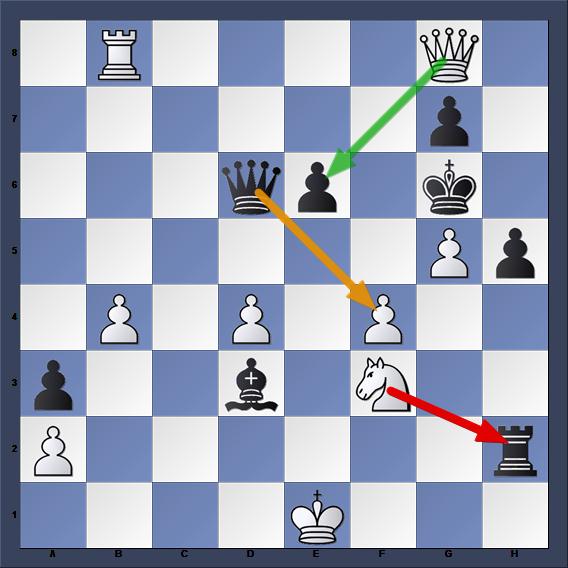
Bd3 63. f4 Qd6 64. Qg8+ Kg6 65. Nf3??: Walking into a devastating trap. See the puzzle below to try to solve it.
Rh1+ 66. Kf2 Rf1+ 67. Kg2 Rxf3 (67… Qd5 68.
f5+ Kxf5 69. Rf8+ Kg4 68. Kxf3 Qd5+ 69. Kg3 h4+ 70. Kxh4 Qh1+ 71. Kg3 Qe1+ 72. Kh3 Bf5+ 73. Kg2 Be4+ 74. Kh3 Qh1+ 75. Kg3 Qg2+ 76. Kh4 Qf2+ 77. Kh3 Bf5#
Choices, Choices, Choices: The Opening Repertoire Part 2

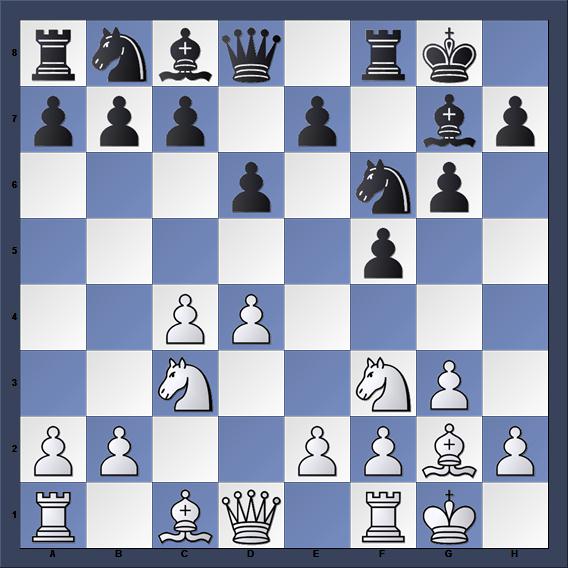
So last I left you I was racking my brain through the complications of the Dutch Defense. I want to show you an interesting tabia, chess shorthand for a commonly-reached position. This position is critical to black’s game. Black has not yet paid any attention to his queen side because weakening f7 necessitated taking extra care of his king first. Here is the tricky part: none of your moves are forced. You can literally play anything here since you’re not parrying direct threats. However, one mistake means your position is much weaker. Two mistakes and you’re facing major positional disadvantages that threaten the material balance.

This tabia and others like it are helpful to focus your study. Rather than learn move orders, which I wasted a lot of time on, you should learn positions. In other words it doesn’t truly matter at the amateur level if white chooses to play g3, Bg2 first or takes hold of c4 and d4 beforehand. I would strongly advise you to memorize the critical positions that occur in your opening. If the opponent makes a move that does not put him within reach of the tabia, and you have done nothing wrong, then he has made an error. Whether or not it confers a tangible benefit will depend upon your ability to exploit the mistake. It’s not always a simple matter. Not all errant moves drop a piece or scream out tactics.

So what would you do here generique voltarene? First we’ll look at the position in terms of imbalances. White has a pleasant space advantage on the queen side, a lead in development, a superior queen’s knight, and is looking at a black e-pawn that can be potential backward. Since e5 has to happen to mitigate d5, and c6 takes the square from the knight we will soon have a weak square on d5 and e6. We’ll need to use pieces rather than pawns to defend those holes.

Which candidates moves did you choose? It’s funny that in Fritz’s top two variations black has to violate general chess principles. In other words this opening is full of exceptions rather than rules. Na6 violates ‘the knight on the rim is dim’ and you would need to recognize that the position of white’s light square bishop allows this move. Another variation begins with Nc6 where black is willing to accepted the weak square. Then after Be3 black prepares the aggressive Ng4 or C5. These move the same piece twice in the opening and make a fourth pawn move at the expense of piece development.

We haven’t even begun to solve the problem of the queen’s bishop yet! The reason I picked this position is to show you that it’s logical to start with a balanced position where you can quickly learn what works and what doesn’t. The Dutch clearly is an exercise in frustration for an inexperienced player and I frankly admit I still don’t know how to handle its muddy waters! Oh, and in the Stonewall Dutch I once saw a great player move a bishop four times in a row to get to the edge of the board. Good luck finding that plan.

Choices, Choices, Choices: The Opening Repertoire Part 1

Part of the beauty of chess is based on the almost limitless possibilities that arise over the board. You have eighteen choices to make on your first move alone, counting each pawn twice since they can initially move either one or two squares. Black then has eighteen replies from the silly h6?! up to the proven nudge of their e-pawn forward one square. The number of possibilities expand exponentially. So how can we build our openings when we rarely see the same move sequences twice?

I think that organizing your openings according to what you want to do in the middlegame is the common-sense approach. I’ll endeavor to show you how to do this through a series on this blog. First I think we should look at how I derived my current repertoire by going back a few years to when I first learned the game. My errors in judgment, at the board and away, will be instructive. Hopefully the gentle reader will excuse the many blunders and oversights from the earliest games. Forgive the novice, for he knows not what he does!

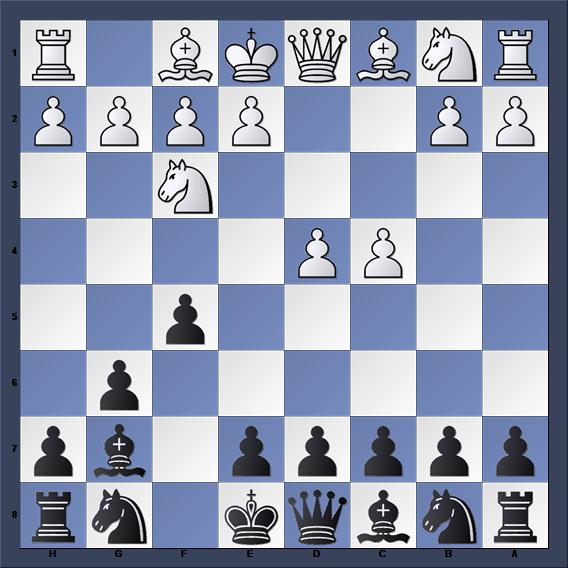
When I first began to play chess I chose the Dutch Defense as black (1. d4 f5). The wild and wooly defense involves pinpoint calculation and a willingness to thrust the pawns forward in front of one’s own king. It is very advanced and adopted only rarely as the main component of d4 defense. How did I decide to adopt this as a beginner? Easy, I looked at the master games of Botvinnik and I watched him dismantle his opponents with aplomb! I wanted to play in an unorthodox fashion and create feats of derring-do on the board. I liked interesting positions like this one from the Leningrad Dutch:

Black has made three moves and already has weaknesses in his camp. He will have to play actively or he will have extensive problems with his king’s safety. Without a positive plan to proceed white’s advantage will become substantial. This opening is not for the faint of heart. It requires an understanding of the imbalances of the chessboard that I did not possess! So today’s lesson is stay within the scope of your current capabilities. Stayed tuned until next time where we’ll dissect things a bit further.

Chess Psychology: Being Objective

I had to travel out of town this past weekend and decided to play in the Virginia Open . This was my worst tournament in quite a while but like all of life’s setbacks it is rich with lessons. I am going to start with my third game because it demonstrates how emotional factors can cloud our judgment during play, leading to incorrect assessments. I was playing against an opponent whose rating appeared to be much lower than mine. Of course this was completely misleading since he had a great tournament, but that didn’t stop me from thinking that I was ahead the entire game! Fritz, a computer engine, proved my hubris. I’m going to provide the full text and a few positions where white can safely tuck away a draw and live to fight another day. Can you find the drawing lines? Some positions cannot in fact be won no matter how many risks we take. In fact, by trying too hard to win to and ‘prove’ our rating we end up with nothing!

1. d4 d5 2. c4 e6 3. Nc3 Nf6 4. Nf3 Be7 5. Bg5 O-O 6. e3 h6 7. Bh4 b6 8. cxd5
exd5 9. Qc2 Bb7 10. Bd3 Nbd7 11. Bxf6 Nxf6 12. Rb1 c5 13. a3 Re8 14. O-O c4 15.
Bf5 Bc8 16. Ne5 Bd6 17. f4 Bxf5 18. Qxf5 Qe7 19. Rbe1 Qe6 20. Qxe6 Rxe6 21. f5
Re7 22. e4 Bxe5 23. dxe5 Rxe5 24. exd5 Rae8 25. Rd1 Ne4 26. Rfe1 Nxc3 27. Rxe5
Rxe5 28. bxc3 Kf8 29. g4 Ke7 30. d6+ Kd7 31. Kf2 Rc5 32. Rd4 Rc6 33. a4 Rxd6
34. Ke3 Kc6 35. Rxd6+ Kxd6 36. Kd4 Kc6 37. Kxc4 a6 38. Kd4 b5 39. a5 ?? Kd6 40. h3
f6 41. h4 Kc6 42. Ke4 Kc5 43. Kd3 Kd5 44. Kc2 Kc4 45. Kd2 b4 46. cxb4 Kxb4 47.
Kd3 Kxa5 48. Kd4 Kb5 49. Kd5 a5 50. Ke6 a4 51. Kf7 a3 52. Kxg7 a2 53. Kxh6 a1=Q
54. Kg6 Qg1 55. g5 fxg5 56. h5 *

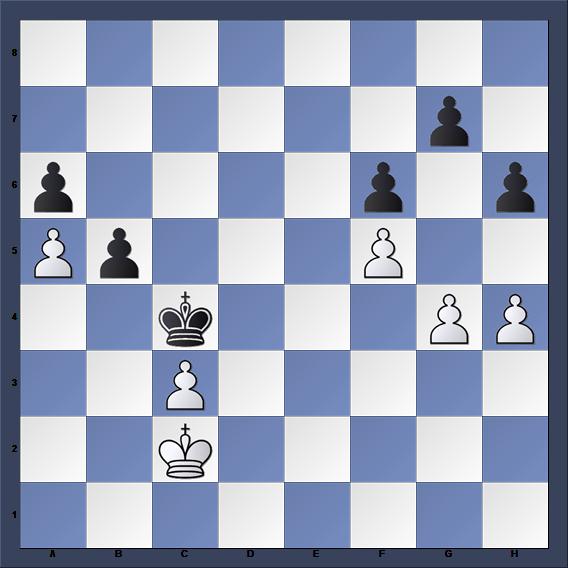
The fourth diagram is interesting. How do you evaluate this king and pawn endgame? Do you see my plan? Even in this admittedly hopeless situation I am confident in the position’s resources.

World Champion Profiles: Emanuel Lasker

Emanuel Lasker (1868-1941) was born in Neumark, Prussia. It took him just fifteen years from first learning the game of chess to defeat the famous German theorist Wilhelm Steinitz and take the championship title. He handily defeated his rival and began an uninterrupted reign that spanned 27 years, until the rise of Capablanca.  Lasker more than held his own against the world’s best like Tarrasch and managed to keep Rubenstein at bay in match play too. The great attacking genius Frank Marshall was completely stymied by Lasker’s strange yet effective play.

I’d like to leave you with a great game that Lasker played in his first championship match with Steinitz. It has loads of drama from the mysterious 29. Kb1, to the knight stuck in the corner, to the novel piece sacrifice that Steinitz tried to turn down.

1. e4 e5 2. Nf3 Nc6 3. Bb5 d6 4. d4 Bd7 5. Nc3 Nge7 6. Be3 Ng6
7. Qd2 Be7 8. O-O-O a6 9. Be2 exd4 10. Nxd4 Nxd4 11. Qxd4 Bf6
12. Qd2 Bc6 13. Nd5 O-O 14. g4 Re8 15. g5 Bxd5 16. Qxd5 Re5
17. Qd2 Bxg5 18. f4 Rxe4 19. fxg5 Qe7 20. Rdf1 Rxe3 21. Bc4
Nh8 22. h4 c6 23. g6 d5 24. gxh7+ Kxh7 25. Bd3+ Kg8 26. h5 Re8
27. h6 g6 28. h7+ Kg7 29. Kb1 Qe5 30. a3 c5 31. Qf2 c4 32. Qh4
f6 33. Bf5 Kf7 34. Rhg1 gxf5 35. Qh5+ Ke7 36. Rg8 Kd6 37. Rxf5
Qe6 38. Rxe8 Qxe8 39. Rxf6+ Kc5 40. Qh6 Re7 41. Qh2 Qd7
42. Qg1+ d4 43. Qg5+ Qd5 44. Rf5 Qxf5 45. Qxf5+ Kd6 46. Qf6+
1-0

But Lasker’s sheer ability resonated as much when he seemed lost as when he was delivering checkmates. He was fantastic at saving the lost game. Check out the game below noting that on white’s 87th he appears to be down a clear exchange and seems to be about to resign. In addition white’s remaining pawn will fall before long and his knight is busy blockading a passed pawn. However Lasker discovers a hidden resource…

1.e4 e5 2.Nf3 Nc6 3.Bb5 a6 4.Ba4 Nf6 5.O-O Be7 6.Re1 b5 7.Bb3
O-O 8.c3 d6 9.h3 Na5 10.Bc2 c5 11.d4 Qc7 12.Nbd2 cxd4 13.cxd4
Bd7 14.Nf1 Rfc8 15.Re2 Nh5 16.dxe5 dxe5 17.Nxe5 Bxh3 18.Nxf7
Be6 19.Ng5 Bc4 20.Bd3 Rd8 21.Rc2 Nf4 22.Bxf4 Qxf4 23.Nh3 Qe5
24.Bxc4+ Nxc4 25.Qe2 Rd4 26.f3 Rad8 27.Rac1 Bc5 28.Kh1 Bb4
29.b3 Nd2 30.Ne3 Ba3 31.Rd1 Bb4 32.a3 Ba5 33.b4 Bc7 34.f4 Nxe4
35.Kh2 Rxd1 36.Nxd1 Qe7 37.Rxc7 Qxc7 38.Qxe4 Qc4 39.Qe7 Qc8
40.Ndf2 h6 41.Qa7 Qe6 42.Qb7 Qd5 43.Qb6 Rd6 44.Qe3 Re6 45.Qc3
Qc4 46.Qf3 Qc6 47.Qd3 Rd6 48.Qb3+ Qd5 49.Qb1 Re6 50.Ng4 Re2
51.Nxh6+ gxh6 52.Qg6+ Kf8 53.Qxh6+ Ke8 54.Qg6+ Kd8 55.Qg3 Re8
56.Qf2 Rg8 57.Qb2 Qd6 58.Qc3 Kd7 59.Qf3 Kc7 60.Qe4 Rg7 61.Qf5
Re7 62.Ng5 Re3 63.Ne4 Qe7 64.Nf6 Kb8 65.g3 Rxa3 66.Kh3 Ra1
67.Nd5 Rh1+ 68.Kg2 Qh7 69.Qxh7 Rxh7 70.Kf3 Kb7 71.g4 Kc6
72.Ke4 Rh8 73.Ne3 Re8+ 74.Kd4 Rd8+ 75.Ke4 a5 76.bxa5 b4 77.a6
Kc5 78.a7 b3 79.Nd1 Ra8 80.g5 Rxa7 81.g6 Rd7 82.Nb2 Rd2 83.Kf3
Rd8 84.Ke4 Rd2 85.Kf3 Rd8 86.Ke4 Kd6 87.Kd4 Rc8 88.g7 Ke6
89.g8=Q+ Rxg8 90.Kc4 Rg3 91.Na4 Kf5 92.Kb4 Kxf4 93.Nb2 Ke4
94.Na4 Kd4 95.Nb2 Rf3 96.Na4 Re3 97.Nb2 Ke4 98.Na4 Kf3 99.Ka3
Ke4 100.Kb4 Kd4 101.Nb2 Rh3 102.Na4 Kd3 103.Kxb3 Kd4+ 1/2-1/2

Bughouse Chess: A Chaotic Chess Variant

Just the other day I played my first game of Bughouse Chess and it quickly descended into a frenzy of piece sacrifices. It was a really fun experience even though my being new to the format got my teammate checkmated rather quickly. I was winning on my board but that was only making his life more difficult! How is this possible? The secret lies in the strange rules.

To play the game you need three friends and two boards since it’s played on teams. You’ll want a chess clock set for five minutes. Each team plays on one board as white and one as black, simultaneously. You play normal chess except that when a piece is captured on one board the owner passes it across to their teammate. The teammate can then use a move to place that piece on their own board. A player can shout out the pieces they need to be able to pressure their opponent, or even survive, and  their willing partner can try to sacrifice that piece on his own board to assist them. The game requires attention to both boards and extreme cooperation.

Even in the bughouse some rules still apply however. A piece can’t drop into giving an opponent check and if one board loses the match concludes. If the first game is drawn then play will continue on the other board.

I really feel that playing this game can improve your standard chess rating; it rewards and encourages sacrificial play. No, they’re not always the soundest tactical maneuvers but repeatedly seeing how the pieces interact with one another can only be beneficial. So much of high-level chess play revolves around piece coordination. Many potential combinations in a standard game are overlooked because the player has not yet honed their creative talents, though they may have a good innate tactical sense. Bughouse will enhance the level of fine detail you can absorb as well as keep your love of chess fresh. Give it a try and I’d love you to post some of your game scores in the comments. Maybe we’ll analyze one in a future column.

A Fun Endgame Puzzler: Checkmate with Two Bishops

White to Move
The bishop checkmate can be one of the trickiest. It’s very easy to fall into a stalemate trap or to accidentally give the defender an escape square. Try it against a friend and see if you can do it. A typical solution, my game against Fritz 12, is below. It took me 21 moves and was by no means a perfect execution. Two things to remember are that the bishop can ‘lose a move’  by meandering about on a diagonal. This means that you are essentially keeping the same position but forcing the opponent to move. This can be a very useful tactic. White’s fifth move is good representation of this. You’ll also notice that there are situations where the bishops and king can limit black to a choice of two moves. Be very careful in these positions as you can easily throw the game away.
Endgame positions are great to know when they come up, but their real value is that they reinforce the sometimes hidden qualities of the pieces. The little chessmen in front of you can perform all sorts of tricks. Keep in mind how the bishops work together to rake the diagonals and control key squares. Note that hypothetically if you had two bishops of the same color you could not deliver checkmate! Black would find a safe haven on the squares of the opposite color. Thus it’s wise to hold onto these wonderful bishops unless the game is very closed or you otherwise have great reason.
1. Ke3 Kf7 2. Kf4 Ke6  3. Kg5 Kd7 4. Kf6 Kd6  5. Bf3 Kd7 (Black’s king gives up the opposition)  6.Bc5 Kd8 7. Bd5 (White takes the opportunity to essentially repeat the starting position with black’s king a little further back) Kd7 (Mind the square in front of your bishop if the opponent’s king is nearby) 8. Kf7 Kc8 9. Ke7 Kc7 10. Be4 Kc8  11.Bb6 Kb8 12. Kd6 Kc8 13. Bc6 Kb8 14. Bd5 Kc8 15. Kc6 Kb8 16.Be6 Ka8 17. Bd4 Kb8 18. Kb6 Ka8 19. Bf5 Kb8 20. Be5+ Ka8 21. Be4# 1-0

Regency Chess Company Review

If you browse around chess retail websites in the UK you will doubtless read plenty of customer comments and reviews. The thing is, how do you know they are genuine? In some cases retailers go to great lengths to let you know they are real while others fail to cover up the same grammatical errors and identical writing styles in the reams of so called real customer comments. There is of course no reason to make them up, unless you are doing things really badly genuine reviews will come in over the weeks and months that you sell chess sets on the internet.

Recently we have seen yet another thing The Regency Chess Company have done that none of their competitors have, well, that is until they see it, they will doubtless copy it. They have signed up to Trust Pilot, a website review company who’s system allows customers to write an unbiased review of their buying experience. What is most important about this process is that The Regency Chess Company have no control or powers to edit or approve reviews. So as long as your review relates to a real order, it’s going to get published.

You would only expect a company who has real confidence in their products and service to make such a bold move. If there are rafts of unhappy customers out there then all those opinions are going to be broadcast on the web for all to see. Thankfully for them they are scoring nearly nine out of ten on their reviews so far, in fact some of the comments are really complimentary to the company and it’s products.

The Regency Chess Company have often been seen as the posh end of the market, with prices to match. Whats interesting is the number of reviews from customers who express delight in the low prices and superb value for money. Read The Regency Chess Company reviews for yourself and see what others are saying about this great company.

The Regency Chess Company Review

The Advantages Of Using Chess Clocks

The Advantages Of Using Chess Clocks

Any tournament player will tell you that a good chess clock is just as important as the board and pieces. What constitutes a good chess clock can often be the subject of heated debate. This is because there a variety of designs and types of chess clocks to choose from and everybody has their personal preference.Types of Chess Clocks

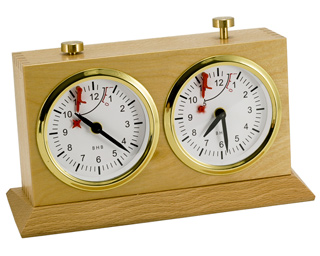
All chess clock have a few things in common. They have two clocks positioned side by side, one for the white pieces and one for the black pieces. There are two buttons or a lever. Depressing the button on your clock will stop yours and start your opponents.

The first choice to make is whether you prefer an analog or digital clock. Many purists prefer the analog clock. Each clock is set just as an analog wall clock would be by twisting a knob on the back until the hands line up correctly. There is a flag hanging from the 12. When the time has expired the flag will fall and players are responsible for noticing when this happens. Some analog clocks run on batteries while others require winding. Most are shaped in a rectangle with the buttons on top. Each button above its respective clock. Today the casing is usually made from a polymer or plastic but older ones are typically made of wood and are much more durable. In most cases, an analog chess clock will be less expensive than a digital one.

Digital clocks are very popular for a number of reasons. The LED displays the time remaining to the second. Many players feel they need to know exactly how much time they and their opponent have remaining. Many of the digital clocks have a much lower profile so players do not have to lift their hands very high to depress the button or lever. Some digital clocks are able to connect to specially designed boards that can sense when a piece has been moved and automatically stop and start the clocks. When one of the players runs out of time, an alarm sounds letting them know the game is over.

Chess Clocks In Play

Tournaments are the most obvious reason people use chess clocks. Each player has the same amount of time to complete either a set number of moves or for the entire game. If one player runs out of time, they lose the game. It is a good way to ensure the players have a fair game.

Many casual players prefer using a chess clocks as well. Lightening and blitz games are popular and rely on heavily on chess clocks. In lightening games the players will have between 1 and 3 minutes each to complete the game. Blitz uses time controls between 3 to 10 minutes per side.

Chess clocks are also used to handicap games. If one player is much stronger than their opponent, they may only have 5 minutes to complete the game while their opponent has 15 or 20 minutes.

Chess Clocks As Training Tools

Many instructors use chess clocks to help ensure pupils have memorized various opening lines. By putting strict time controls on the opening sequence of moves, they can easily determine how efficiently a student has mastered an opening. The same methods are also employed in end games to evaluate how well the student understands various principles.

Chess clocks have been around for years and are as important a part of the game as the pieces themselves. If you haven’t played chess on the clock, you are missing out on one of the most exhilarating aspects of the game. The Regency Chess Company® in the UK is one of the largest stockists of chess clocks with some excellent prices too.

Lord of the Rings Chess Set

Popularity for The Lord Of The Rings has never been greater since the relatively recent adaption of the story as a massive blockbuster movie. Prior to the films release there was always a strong and loyal following of JRR Tolkiens books but since the release of the films there has been an explosion in popularity.

As with all highly popular movies the spin off merchandise has become prolific and there was little surprise to see a Lord of the Rings chess set made available. The official set is made by an English company, Studio Anne Carlton who are very well known for their high quality themed, painted chess sets. The set is produced under licence from New Line Productions.

The set is a very faithful tribute to the characters in the movie with the accuracy extending to the faces of the human like characters being faithful to the actors who played the parts in the film. Gandalf for example looks just like he does int he movie and you can see a very stong likeness in his face to Ian McKellen, the actor who played him in the films my sources.

There are other Lord of the Rings Chess Sets available alongside the SAC set. There is the two towers 3D chess set and the bronze and pewter effects sets. The sets are at various price points and there is a type available for every Lord of the Rings fans budget.

There is little doubt that these lovely chess sets will become highly collectible in years to come. For those who have the patience and discipline to keep them unwrapped and packaged in the original packaging high prices will no doubt be attached in years to come. There is no doubt that popularity for the Lord of the Rings will remain, maybe not for as long as the game of chess, but certainly for a good number of decades yet.

Scroll to Top