Grunfeld Defense, Russian System: Game in 30

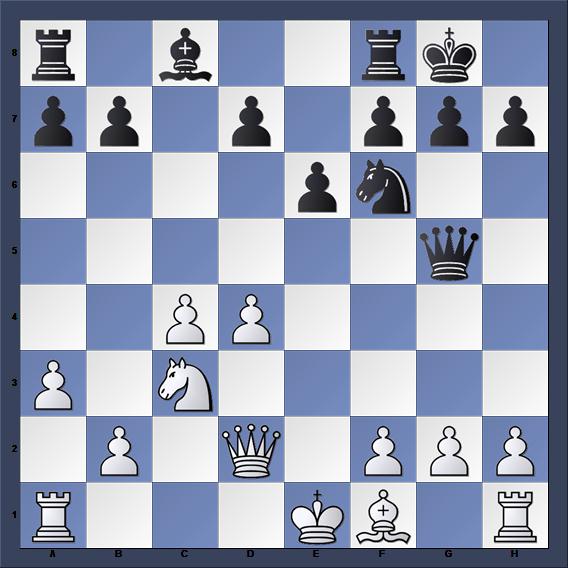
This is a game I played on Chess.com today with an up-and-coming player. I thought it was good chess, yet we each missed golden opportunities. Both players saw better moves at the critical junctures but did not fully appreciate their value. Seeing good moves, even if you reject them, represents progress toward chess acumen. The time controls were thirty minutes and the game took place in the Russian system.

1. d4 Nf6 2. c4 g6 3. Nc3 d5 4. Nf3 Bg7 5. Qb3 dxc4 6. Qxc4 O-O 7. Bf4 c6 8. e4
b5 {I had never seen this move before but it is black’s best try against the
Russian System. It will lead to simple equality. In this particular game I
hoped to prove black overextended.}
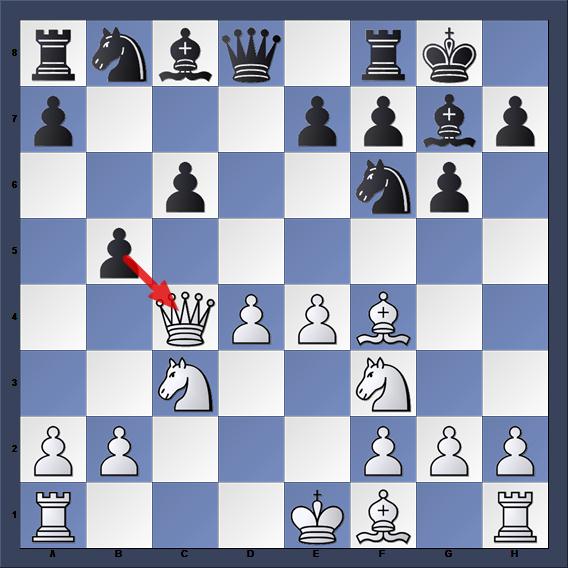
9. Qb3 Qa5 (9… a5 10. Qc2 Bg4 11. Be3 Bxf3 12. gxf3 {White must incur a pawn weakness in order to avoid losing the pawn on d4 (though he would have plenty of play).}) 10. Bd3 Be6 11. Qa3 Qxa3 12. bxa3 Nbd7 13. Ng5 Ng4 14. Nxe6 fxe6 15. Be3 Nxf2 (15… a6 16. Be2 Nxe3 17. fxe3 c5) 16. Bxf2 Rxf2 17. Kxf2 Bxd4+ 18. Ke2 Bxc3 19. Rac1 Bb2 20. Rxc6 Ne5 {Putting direct pressure on the pawn fixes the rook. White might have some ideas about putting the rook on a5 to set up a sacrifice. White would like totrade his bishop for black’s superior knight.} 21. Rc5 Nxd3 {I think black should have kept the knight on its strong square.} 22. Kxd3 a6 23. Rd1 (23. a4 b4 {This variation concerned me, though I liked the look of white’s a4. As it turns out the b pawn is not that dangerous. Black’s fate is tied to his pawn, so white should further tie down black’s rook to a8 and do damage with his other heavy piece generic cialis online.}) 23… Bxa3 24. Rc6 Bd6 25. h3 Kf7 26. Ke3 e5 27. Kf3 {A feint towards the queenside. Black cannot push his pawns yet.} a5 28. Rd5 b4 29. Rb5 h5 30. Rbb6 Rd8 31. Ra6 b3 32. Rxa5 {?} (32. axb3 g5 {White is winning though the fight is uphill.}) 32… b2 (32… Bb4 33. Ra4 Rd3+ 34. Kf2 Rd2+ 35. Kg3 {A brilliant drawing line that neither player noticed.}) 33. Rb5 Ba3 34. Ke2 Rd4 35. Rc3 Rxe4+ 36. Kd1 Bb4 37. Rb3 Re1+ 38. Kc2 Re2+ (38… Bc5 39. Kxb2 Bd4+ 40. Ka3 e4 {It’s a theoretical draw after a rook exchange. A pawn and an advanced passer equal the exchange.}) 39. Kb1 Rf2 (39… Bd2 40. a4 Rxg2 41. a5 e4 42. a6) 40. R5xb4 Rxg2 41. Rxb2 Rg1+ 42. Kc2 {My opponent is in time pressure because I talk too much.} Rg2+ 43. Kd1 Rg1+ 44. Ke2 Rg2+ 45. Kf3 Rxb2 46. Rxb2 Kf6 47. h4 e6 48. a4 g5 49. a5 1-0
 

The Ruy Lopez, the “Plan B” Variation

Every tournament player is familiar with the theoretical difficulties of the Ruy Lopez. Due to the sheer volume of preparation necessary, white occasionally runs into a system with which he is unfamiliar. White can easily transpose to quieter lines, usually after an early d3, with play that closely mirrors the quiet lines of the Italian Game and Four Knights. So it might be wise for those who want to defend the Spanish to learn a little about white’s back-up plan.

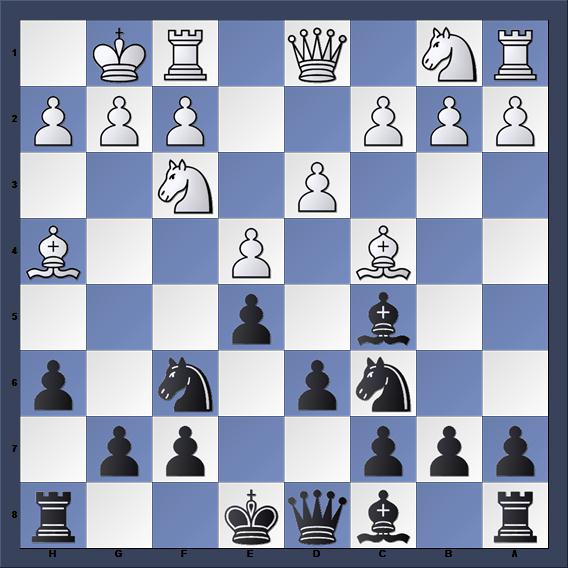
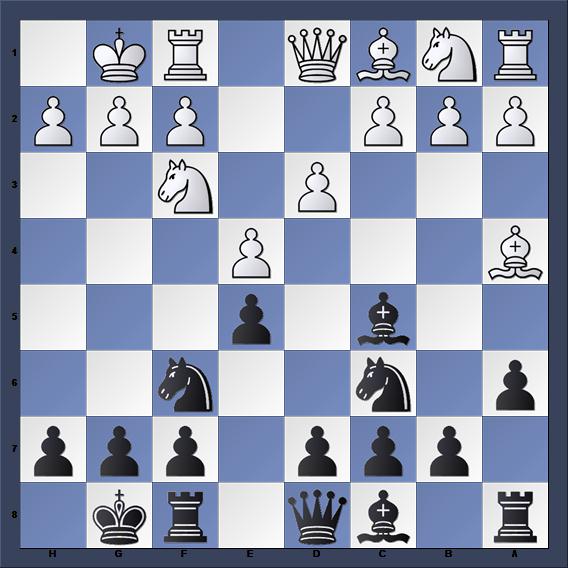
1. e4 e5 2. Nf3 Nc6 3. Bb5 a6. 4. Ba4 Nf6 5. d3! 5 Bc5 6. 0-0 0-0?

After 7 Nxe5 black does not have any compensation for the pawn. I discussed my game with my opponent afterwards, and we failed to find resources for black. Nxe5 is pretty obvious so why did I allow black to take the pawn?

I evaluated the position incorrectly. I believed that the bishop pair would be worth .3 and my extra development would make up for the pawn. There’s something inherently subjective about the scientific approach to chess; it’s easy to find things to confirm what you’d like to be true. I put myself in a bind here. The extra central pawn is just incredible for white. Evaluating the pawn as worth one was a mistake; it is worth about 1.3. It’s not just a pawn, but a critical offensive and defensive resource.

Better is 6. d6 where black has an Italian Game with a free a6, allowing the bishop to burrow in on a7. The white bishop does not attack f7 and will need to be rerouted, perhaps to c3. The dynamism in normal Spanish positions just isn’t here for white.

The best try is 7. Nc3 b5 8. Bb3 0-0 Bg5 h6 Bh4 Bg4 where it’s tough to make progress. Each sides wants to get rid of its f-pawn and play along the semi-open file. The lack of open files lends itself to minor piece exchanges; the endgames that result from this structure tend to feature the heavy pieces, and thus are pretty forgiving. If black take the knight on f3 he may consider castling on the queen wing, since it will be imperative for him to keep the game closed.

One creative try is to for black to oppose bishops on e6 after white tries to open the f-file. White will either capture and give black an open f-file, or will open a file for black’s queen-wing counter offensive. Only oppose bishops after white has declared his intention to play on the f-file, since otherwise the semi-open a-file is worth more to white than his pawn weakness is to black.

Both sides are headed for a strategic struggle on the wings. Breaking in the center concedes space for the side initiating the exchanges and is generally unwise.


Working on the Nimzo-Indian Defense: Part One

Many players choose to face the Queen’s Indian rather than the Nimzo-Indian, delaying Nc3. I like the strategic positions of the Nimzo and I know I’ll need to learn them anyway; the sooner the better. I’ve picked up David Vigorito’s Challenging the Nimzo-Indian and I am very impressed. I didn’t have to read very far before I found a variation for which to aim; it will be a sort-of road map as I learn the defense. I always start my preparation by learning the theoretical endgames emerging from a particular position.

1. d4 Nf6 2. c4 e6 3. Nc3 Bb4 4. Qc2 O-O 5. a3 Bxc3+ 6. Qxc3 b6 7. Bg5 Bb7 8.
f3 h6 9. Bh4 d5 10. e3 Nbd7 11. cxd5 Nxd5 12. Bxd8 Nxc3 13. Bh4 Nd5 14. Bf2

Position after 14. Bf2

So I plan to play this endgame in correspondence chess until I can become proficient in it. This may seem silly, what’re the chances I’m going to get to this position when it’s fourteen moves deep? Yes, there are other options for black, but the thematic queen trade comes up in lines after 8…c5 as well.

Another reason I’ve chosen this approach is that takes advantage of 4. Qc2, which provides me a way to avoid structural weaknesses. White has some choices about which type of game he wants to play. Black will have to play on my terms and challenge me in an endgame.

Admittedly I’m still developing an understanding of the position. I’m looking at black’s fourth-move alternatives to 4…0-0.  I’m starting with c5 because it is the most common. Here’s what I expect to see a lot:

4. Qc2 c5  5. dxc5 (forced, since white will lose the first-move advantage if he plays defensively, to support his pawn.)

5…O-O 6. a3 Bxc5 7. Nf3 Nc6 8. Bg5 Nd4 9. Nxd4 Bxd4 10. e3 Qa5 11. exd4 Qxg5 12. Qd2

Position after 12. Qd2

The lines after 4…d5 resemble those of the Ragozin System, which I face as a Queen’s Gambit player. There shouldn’t be anything new there. After learning the main lines I’ll focus on the sidelines. I’ll repeat the same strategy after each subsequent move, with an eye towards favorable endgames. We’ll learn a little bit more in future installments of this series.


Watch out for your Little Brother

I grew up an only child but I always wanted a little brother or sister; somebody to protect, and only occasionally browbeat into doing my chores. If there’s a scrawny kid brother on the chessboard it’s the b-pawn. In the beginning you’ll need to babysit him. Yes it’ll cramp your bishop’s style watching this uncool, unimportant little tyke, but it’s the right thing to do!

1. d4 d5 2. c4 c6 3. Nc3 Bc5?! 4. cxd cxd 5. Qb3 and black is in a pickle. He will drop a pawn for insufficient compensation. He has room for counterplay if he condemns his little brother to the fate awaiting him, but white will keep excellent chances in these lines too. Watch your move orders!

1. d4 Nf6 2. Bg5 c5 3. Nf3 cxd4 4. Nxd4 Qb6 and the position will be equal after Nc3, the best move. It’s the threat of b5, to protect black’s pawn after dxc4, that necessitates white’s a4, and allows the bishop to leave it’s three-square diagonal. Matthew Sadler offered a handy rule of thumb, that your queen must have c7 available to her before your bishop can leave, assuming of course that the opponent’s queen’s knight doesn’t bar the queen’s way. Look after your little wooden family.

This is a game where my opponent failed to heed this advice. His position degrades quickly. He is an online player, tactically clever with an unpolished form.

1. d4 d5 2. c4 c6 3. Nc3 Bf5 4. cxd5 cxd5 5. Qb3 This is the way to punish black for his transgression of chess principles. Knights before bishops is more that just a suggestion -it’s a necessity

5…Qd7 6. Qxd5 Qxd5 7. Nxd5 Kd7

With black’s passive Qd7, not a real development move, and Kd7 the second player refuses to acknowledge his initial error. When you make a mistake continue to keep a good position. Do not chase one weakness with another as you try to justify your earlier moves.

8. Bf4 Na6

Na6 should have come in place of Qc7. It’s not a terrible place for the knight, looks worse than it is.

9. Nf3 Be4 10. Ne5+ Ke6 11. Nc3 Bc6 12. e4 Nb4 13. Bc4+ Kf6 14. Ng4+
Kg6 15. h4 h5 16. Ne5+ Kh7 17. Bxf7 Be8 18. O-O-O 1-0

I don’t want to turn this into a vanity piece. I played well, but not perfectly. The point is that a player can quickly find himself in a compromising position if he’s not careful with his move order. Don’t be another statistic!


Book Recommendation: The Art of Attack in Chess

I’m reading Vladimir Vukovic’s Art of Attack in Chess and I love this highly-instructive guide. I’m not through the entire thing, but it does something I haven’t seen yet. It tells you how to gain an initiative. For instance, the author tells you how to make a king flee and how to attack along an open e-file; the next time you see a circumstance Vukovic has touched on you’re more likely to appreciate the extraordinary tactics present. I can already feel myself unlocking my inner berserk mode! Vukovic uses the following game to teach common mating-net errors. The text is from Chigorin-Caro (1898).

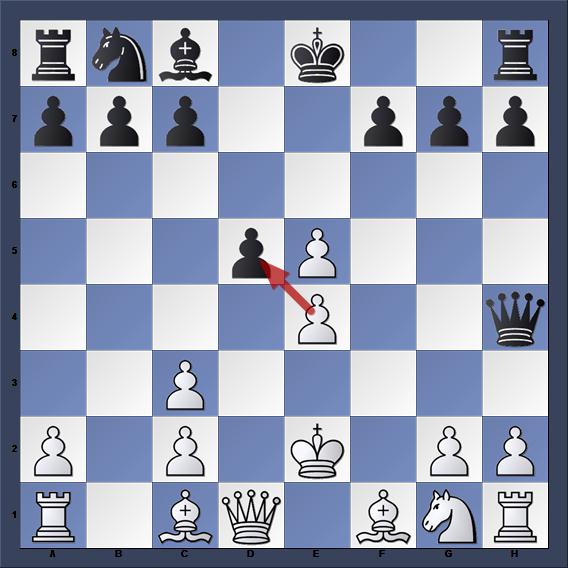
1. e4 e5 2. Nc3 Nf6 3. f4 d5 4. d3 Bb4 5. fxe5 Nxe4 6. dxe4Qh4+ 7. Ke2 Bxc3 8. bxc3

What do you make of black’s enterprising play? Does he have enough for the knight? Whether or not you could win here depends on your ability to exploit the uncomfortable white king. You’ve got to tie the king down, either in the center of the board or an edge; establish a mating net for both the king’s current position and for any possible flight square; lastly find a focal point (the square which will host the lethal check). When you view the rest of this game do it through this lens. Consider the following:

Was the white king safe on his fourth rank? What does it take to really make a king mortally frightened?

Black’s attack didn’t stall but he did leave the white king alone for a while. Why is this? How do you know when it’s appropriate to abandon the monarch for a time? I find it very instructive that black secured the squares around the king, particularly on white’s second rank, before he continued the chase.

Can you see black’s motivation behind the quiet 22. Qg2? It’s not a hammer blow but it does chop off a large chunk of real estate. It really is very difficult, even with a local piece majority, to mate a king on the lam.

The 25th move is the high-water mark for black. How could he have prevented white’s king from finding a haven in the corner? Is it possible that he pursued the king too aggressively?    Is there a time when the king is in the greatest possible danger given the positional considerations at hand? White’s king was a giggling mongoose baiting black into pursuit.

Bg4+ 9. Nf3 dxe4 10 you could check here. Qd4 Bh5 11. Ke3 Bxf3 12. Bb5+ c6 13. gxf3 Qh6+ 14. Kxe4 Qg6+ 15. Ke3 cxb5 16. Ba3 Nc6 17. Qd5 Qxc2 18. Rac1 Qf5 19. Rhe1 Rd8 20. Qxb5 a6 21. Qb1 Qg5+ 22. f4 Qg2 23. Bd6 Qh3+ 24. Ke4 f5+ 25. Kd5 Qg2+ 26. Kc4 b5+ 27. Kd3 Qf3+ 28. Kc2 Qf2+ 29. Kb3 Rc8 30. Rc2 Qty 31. Kb2 Na5 32. Ka1 Qc4 33. e6 Nc6 34. Qd1 h5 35. Rg1 Rh7 36. Rxg7 1-0

The Raw Diet

In the reality of our lives we are much more than any one thing that we do. We may lay bricks under the hot sun by day, but come alive in front of a canvas each night. Every one of us is moonlighting somehow; this dualism is what makes humanity special. A crab crawls across the bottom of the ocean and that’s it. His being is tied up in routine behavior. He would not walk on land even if he could.

Within our “chess lives” what we become is a definable quantity. Our chess identity is more or less a function of what we study. Feeding the machine the right food then is essential. I am giving myself the equivalent of a “raw diet” today. I’m getting back to the basics of chess, principles and simplicity. I won’t pollute my brain by looking at my dragon chess set, it’s back to basics.

1.d4 d5 2.c4 c6 3.Nf3 Nf6 4.Nc3 e6 5.Bg5 h6 6.Bxf6 Qxf6 7.Qb3 Nd7

I’ve selected this as white since I put the queen on b3 in fighting the Grunfeld. This Moscow Semi-Slav sees white without the bishop pair but with decent central control and development. What I realize is that white doesn’t have to win before the endgame just because he could be slightly worse. He’ll need to convert his dynamic advantages into a strategic weakness for black. The burden isn’t such that white has to checkmate black in the opening. This is something that’s easy to miss.

8.g3 dxc4 9.Qxc4 e5 10.O-O-O Be7 11.Ne4 Qf5 12.Qc2 O-O

I rather like the knights in the middle, supported by pieces. Who says you need outposts? G3 and Bg2 work well with the coordination of other pieces. It’s interesting to see how white tries to improve his position. He is comfortable but can lay claim to nothing significant. Korchnoi will have to demonstrate that white can get away with simple play.

13.Kb1 exd4 14.Nxd4 Qa5 15.Bh3 Nf6 16.Bxc8 Raxc8 17.Nxf6+ Bxf6

18.Nf5 Rcd8 19.f4 Rxd1+ 20.Rxd1 Rd8 21.Rxd8+ Bxd8 22.a3 Qd5 23.e4

White has managed to keep a small advantage, and a plan. Despite the worse minor piece his pawn structure is great. Pawn chains get better as they lengthen.

Qd7 24.e5 Be7 25.Kc1 g6 26.Nd6 Bxd6 27.Qd2 Kf8 28.exd6

Ke8 29.Qe3+ Qe6 30.Qxa7 Qe1+ 31.Kc2 Qe2+ 32.Kc3 Qe1+ 33.Kc2

1/2-1/2 Although Korchnoi could not beat Breev but he took no risks. The late Bent Larsen was a master at “playing for two positive results,” a situation where you can’t lose. When you know you can’t lose a position you are better poised to take chances to win it.


The 2012 World Open

I’m taking a little vacation to the City of Brotherly Love. On July 4th, with any luck, I’ll be celebrating my independence from the worst run of chess I’ve ever played. In the spirit of a wonderful holiday, I declare these truths to be self-evident:

1) I need to set aside time to look over tactical puzzles. One hundred per day at Chesstempo.com should be sufficient. I will step up my physical exercise routine as well. Mens sana in corpore sano.

2) I must learn my openings a little deeper. I will refresh my repertoire, plugging holes as needed. I will play top-level openings, leaving pet lines for skittles and blitz.

3) I must study the masters to think like them. Once a week I will dedicate two hours to studying the greats, particularly the middle games in which I will find myself.

4) I will not settle for merely a good move. I will make the best move that I can. The first move that I generate is right only about thirty percent of the time. I don’t like those odds.

5) I will assume that my move is incorrect, and play the devil’s advocate.

6) I will play for initiative when it is appropriate. I will look for an attack when the position calls for it. I will not simply castle or develop a piece when there’s a real possibility of a winning tactic.

7) I will not balk at complications, but welcome the opportunity to gain an advantage in a dynamic position.

8 )  If my opponent has two bishops, and I choose to open the game, I will be darned sure that my initiative is an enduring one.

9) I am playing in a lower section but I will not give anyone the gift of my overconfidence. I play against pieces not people.

10) I will have fun and not play for results. There is no way to determine the future except to prepare successfully. When opportunity knocks be ready with your hat and coat.

Richmond, VA Spring Open

I have just returned from my first tournament in some time; I now know how bears must feel after hibernation, having the world-weary sense that the universe is very different, though its problems inexplicably remain the same. I had not trained or practiced since my last tournament, two months before. Nevertheless I had high hopes. I put in a performance rating I’m not going to brag about; I beat an 800, an 1100, lost out of the opening against a 1600, and fell to a 1550 who was flat-out more energetic.

My first two opponents gave away pieces early on, so the games don’t show a high-level of skill. You know those situations, the one who is down material slowly gets ground down. The player who is up material plays safe moves that limit counter play, eschewing complications.

The game that I lost in the opening is fairly instructive, at least for a while.

1. e4 e5 2. Nf3 Nc6 3. Bc4 Nf6 4. d3 Bc5 5. Bg5 h6 6. Bh4 d6 7. O-O 7… Na5

Black can play 7. Na5

I like this move. Every time I get this position I want to chase the bishop. Finally I tried it. The knight move gives black a clear plan; by exchanging minor pieces black will try to go to an endgame where the bishop  pair matters. Black has also weakened white’s pawn structure. White has a clear plan too. If he takes too long to get organized his dynamic advantage (better piece development) will come to naught. He needs to play with some pep in his step, but unfortunately it’s hard to see the way forward.

This is a cute way to narrow your opponent’s options. He’s going to create pressure, and all you have to do is defend to be slightly better. If your opponent can’t find an attack he’ll have some weaknesses with which to contend. You no longer bear the burden of trying to win. The onus belongs to white, and if he can’t rise to the occasion you’ll have a fine chess game.

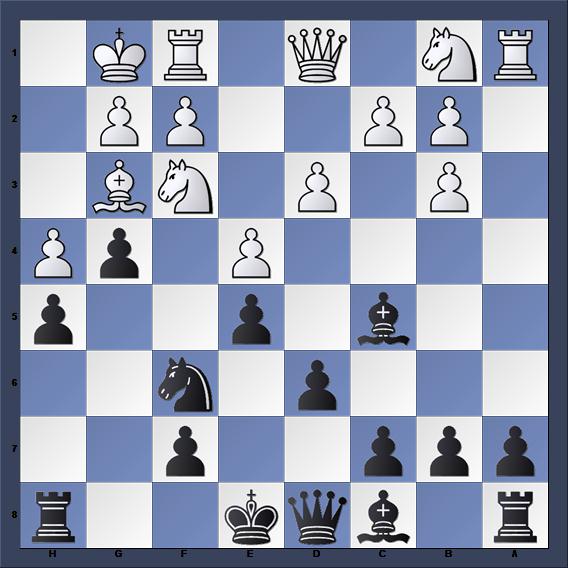
Play may continue in this fashion: 8. Bb3 Nxb3 9. axb3 g5 10. Bg3 h5 11. h4 g4

After 11. g4

Rather than have to wind through the serpentine paths of opening theory it’s better just to play this solid, forcing line. Black will castle long and use rook pressure along the f-file (after f5). Studying this position will be worthwhile. I expect you can navigate to this point quite often.


The Chess Ecosystem: Children of the Corn

They get their designation from the American horror of the same name. The plot involves crazy children doing a lot of unkind things to adults. If you’ve ever lot to anyone less than 4’6″ then you understand this label. Note: A subset of the species is the “child that will Soon be better than you”; the difference is that the brilliance of the latter is not yet fully developed, offering a scant glimmer to the middle-aged chess enthusiast. It won’t last long.

Identification: The children of the corn are usually demure, and not quite socially comfortable. They come between ages twelve and sixteen. They may have a signed board and/or a father who is a chess master. They are extremely precocious, usually second-generation Americans, and often attend school at home. Research agrees that they take instruction from the “Overly Critical NM Father”. Chess-wise they are highly tactical and booked-up. They are a curious juxtaposition of mathematical smarts and gross childhood habits, like nosepicking.

Sometimes you can see the Children of the Corn running through the halls in a gaggle of small people. They make a lot of noise about their winning positions, regardless of the results, and are easy to spot at any tournament across the country. They hate adults, and secretly relish beating them. They’re bitter inside because of their regimented lives and take it out on the insurance salesman or middle manager sitting in front of them. Scary.

How to beat them: You can’t. It’s lose/lose. What are you going to do, brag to your buddies about making a youngster burst into tears? If you lose, you darned well know you can’t tell anyone that. A friend lost to a ten year old not long ago, in about fifteen moves. The little conqueror used his extra time wisely, running through the tournament like an airplane, ADHD in full bloom. The best you can hope for is that one of them will become really, really good and, if you cracked them once, you get a story out of the deal. If they have a weakness it’s their underdeveloped psychology. You can wheedle them into a draw even when it’s not beneficial for them to accept.

Fortunately losing to a Child of the Corn is not all bad. They’re plenty eager to regale you with the fruits of their chess study. They’re extremely booked up and if they play an opening move it’s probably from Fritz. Save yourself some time and just play what they play. A postmortem with the rug rat will teach you a lot.


A Confederation of Dunces

Sometimes we lose our sense of proportion. We’re crazy General Custer on the wrong end of Bull Run; perhaps we are tasked with fighting off the innumerable Persian hordes. Inside of us throbs a certain something. Our pulse quickens, we yell out, “This is Sparta!” and go on to glory – well, not always. Our actions can descend into caricature.

An older gentleman, Gary, played a very interesting chess game last Tuesday. After an hour, all but two pieces and pawns remained on the board. Both players had approached the Tarrasch French in front of them with deliberation and skill. My own match ended quickly, so I caught quite a bit of their game.

Unfortunately, I don’t have the game score because I had to go buy Gary some baby aspirin for chest pain. The older man’s health had been worsening throughout the game. His complexion was sickly and it was obvious he was in extreme discomfort. Despite our trying to reason with him he refused to concede.

“I’m playing some great chess,” he offered in rebuttal. This was true, but beside the point. Confronted with his own mortality he kept playing. Soon both players got into time pressure.

Gary lost the game. As time wore on his physical weakening took its toll on his mental ability. Fortunately, the aspirin did the trick, and Gary seemed to be in good spirits by the time he left. Disaster averted. The old man grumbled about the inconvenience of his physical health, upset about the loss.

What he’s going to remember is not his physical distress, his possibly life-threatening decision, but the game score. That’s what makes chess players want to devote their lives to moving wood around. The idea of building something, of a rarified experience. Maybe it’s the game’s fault. Having success in chess means full immersion. It’s no wonder that dedication sometimes becomes absurd. Of course, I haven’t half Gary’s skill.

We all make all our final stands somewhere. Perhaps Gary realizes that the time will come to leave this Earth, and his position will necessarily be losing. What’s he’ll leave is a thought record and the color he injects into it.


Scroll to Top