Uncategorized

They’ve Forced my Hand

After reading the revolutionary “How to Win Chess Almost Every Time” on Wikihow I’m reduced to tears dropping down upon a keyboard. I’ve been writing to you for six months, on chess topics ranging from the Stygian to the sunny, but I still don’t have you winning nearly always. I promise to turn over a new leaf soon! You can look forward to such illustrious columns from me as “Proceeding When your Opponent Also Knows how to Win Almost Every Time.” Won’t you stay tuned for my reflection piece, “Why are you Settling for Winning Half your Games? I think that the columns will be a bit derivative because everything needed to be said is already on that one page, but I’ll press on if I can.

I’d like to apologize to a necessarily angry readership. You should’ve expected more. Never once did I tell you to move your pieces forward. Sometimes the only advice you need is simple common sense! It’s all easier than studying the Najdorf too.

Perhaps you would even be right to question my fitness as a writer of a chess column. After all, I don’t even win more than half of the time against players of equal strength. To think that these writers have avoided arbitrary considerations and codified the Philosopher’s Stone of chess…”Go about as a rule of thumb, 60% aggression and 40% defending.” What have I been doing but dabbling?

Reading this piece gave me some cold comfort despite the abrupt end to the search for answers in chess, and my own guilt at not having forecast it. The flamboyant talent of Nakamura and Carlsen has heretofore been wasted, many contests decided by threefold-repetition as they refused to move pieces forward; we should see some more exciting contests now that strategic principles are available. I’m not the only one who has fallen down on the job either. Writers like Jacob Aagaard have been penning useless books on the Queen’s Indian; everyone now knows that it’s ridiculous and unsound to settle for a backward move like e6 in your opening. Support groups for chess players exist if you’re distraught about the sudden invalidity of defenses such as the French. There is help!

The only question I have is that if the article makes you win nearly always then why do the authors advise you to practice?
 

Genius or Fraud?

Isaac Newton accomplished quite a bit. He was an inventor, though of course no one truly needs some of the more highbrow stuff – either this Calculus, or the one with numbers and symbols. He was also a theoretician who happened upon gravity. Newton is supposed to have had one of the highest IQs, by inference since they didn’t have such tests in the 17th century, even among geniuses. He wrote theological works and found time to study optics. It’s a luminous CV, but one thing he couldn’t do was play chess.

There is record of him owning a board, but no evidence exists of his game scores. I surmised the other day I could “wipe the board with him” and set out to prove it. Of course he’s quite dead, so a human being had to play as Isaac.

“Isacc” agreed to calculate variations well, but without a conscious plan. A genius unfamiliar to chess but possessing formidable analytic skills might play this way. Isaac agreed on forgoing any positional considerations not noted down in literature extant to Newton. His technical endgame technique would be purposefully hideous and we decided that Newton, cagey fellow, would play a random opening to try to get his more modern opponent away from a theoretical struggle. Here is how the old coot fared. He has black in a Game in 30.


1. e4 d6 2. d4 Nf6 3. f3 {I’m trying to convert this Pirc into a Saemisch
King’s Indian. Black can play the lines of the Austrian Attack, this has some
similarities, without issue since white’s f4 will take two moves. F3 attempts
to “strongpoint” the e4 square.} g6 4. c4 Bg7 {They didn’t really fianchetto
bishops back then, nor did they have Indian Defenses. Of course, without
mixing it up a little an older player would be lost in a theoretical jungle
against even an average tournament player.} 5. Nc3 O-O 6. Bd3 Nc6 7. Nge2 e5 8.
d5 Ne7 9. O-O Nd7 {Perhaps better for white is just to develop and take the
dark squares. He’s solid and has a spatial advantage. He’s proven what he
needed to out of the opening.} 10. b4 a5 11. bxa5 {B5 would be better because
I can control the hole on c5 thanks to my queen. That knight on c3 isn’t going
anywhere, anyhow.} Rxa5 12. Nb5 Nc5 13. Bc2 c6 14. dxc6 bxc6 {Isaac gave me a
preponderance of pieces in my area of attack. Let’s see if he can deny me the
space I need for my plans.} 15. Qxd6 cxb5 16. Qxc5 {This pawn sacrifice is
quite exceptional and enough to make black slightly better. Not bad for a
human computer.} bxc4 17. Qxc4 Qb6+ 18. Rf2 Ba6 19. Qb3 Rb5 20. Qa3 Rc8 {This
is quite a critical section of the game. Black is under no threat, and I like
his practical chances. Unfortunately Newton doesn’t know how to optimize his
piece placement.} 21. Be3 Qb7 22. Bd3 {Black is now threading a fine line
between activity and chaos in the ranks.} Bf8 23. Bxb5 Bxb5 24. Bc5 {Not as
good as the simple Qc2 which breaks one pin and engages another. I was in love
with the a3-f8 diagonal but it’s time to change plans.} Nc6 25. Bxf8 Ra8 26.
Qb3 Kxf8 27. a4 Qa7 28. Qxb5 1-0

Sorry old boy. We might not do a lot in the world today, but we did build a society where mediocrity can flourish. Take that back to the 17th century with you.


An Olympic Blunder

A great many chess games end without displays of brilliancy. These unmemorable struggles get filed in the back of our brains where we put irrelevant data. Today I recalled the difference between a eukaryote and a prokaryote, after someone walking by had hummed a few bars of Cypress Hill’s “Insane in the Membrane.” It’s all still up there unless you let your brain, like an inept housemaid, re-sort all of your things. Do not let your bad chess, or your opponent’s bad chess, get sent to the recesses of your mind. There are hidden lessons in the blandest of games. When you make a mistake because of your opponent’s mistake you truly didn’t understand his mistake. All clear? Here is an example:

My opponent here dropped a knight in  a game that was sloppy and non-theoretical. He probably saved us some time and a few headaches. What went on in this game? It took twenty minutes and nobody had any fun. Let’s get something productive out of this amateurish outing.

1. d4 Nf6 2. Nc3 {This belongs to a family of queen pawn openings where white
does without his c-pawn. It’s played occasionally at a high level. Nobody
studies the defense from the black side so it’s easy to get caught not knowing
what to do.} d5 (2… e5 3. dxe5 Ng4 4. Qd5 Nc6 5. Nf3 Qe7 6. Bf4 Qb4 7. Qd2 {
The attempt at transposing into a Budapest Defense fails. White’s c4 weakens
his dark square but here he has not played it.}) 3. Bf4 Bf5 4. f3 {This is
premature. It helps to control the center but some of the central push’s venom
is gone since I have time to prepare.} g6 5. g4 Bd7 6. e4 c6 {? I needed to
capture the pawn. I thought I would play in hypermodern fashion here and
provoke white’s pawns forward to weaken them. He seems all too willing, but
space is a funny thing. You don’t know how much room you need until you have
too little.} 7. e5 Ng8 8. Qd3 {Nobody has a plan. This is more dangerous for
the attacker since the burden belongs to him. Evaluations bounce back and
forth over the next twelve moves.} f6 {Not fearing the pin on the knight after
a recapture. Bf6 solves that problem. More troublesome is that the weakness
I’ve generated doesn’t actually help. He can simply keep the tension in the
heart of my position and recapture with his queen when I capture.} 9. exf6 Nxf6
10. Be5 Bh6 11. Be2 {Beware of developing moves that don’t actually help you
at all. White simply passed his turn.} O-O 12. h3 Qb6 {This is a waste of time.
C5 is important as I see no great way to get rid, or make use of, the queen
bishop.} 13. f4 {It wouldn’t be the end of the world except white needs to pay
attention to e4. He soon forgets about the comfortable roost he’s given black.
The king’s knight becomes quite powerful. It’s definitely a ram and a lever.}
Bg7 14. Na4 Qb4+ 15. c3 Qxa4 {It’s hard to say what white was thinking.} 16. b3
Qa6 17. Qc2 Qb6 18. Nf3 Bc8 19. Nh4 Nbd7 20. f5 Nxe5 21. dxe5 Ne4 22. fxg6 Qf2+
23. Kd1 Qxh4 {There’s not much to this. White misses a tactic.} 24. gxh7+ Kh8
0-1


Feet on the Floor

The United States Chess Federation’s rating system has built-in rating floors. These prevent sandbagging, intentionally dropping your rating to play against lower-rated opposition, and also help preserve chess dignity. Without floors you could jeopardize a rating you worked your whole life to build.

My chess rating has dropped precipitously in the past few months and I’m nearly at my floor. At this proverbial fork in the road I can either take a break, I am taking up a new combat sport and trying to learn the piano anyway, or I can have some fun. I choose the latter.  I will be venturing The Vulture as black (as white I will be launching my f-pawn forward one square in what is known as the Barnes Opening). You may be asking why someone who wants to rehabilitate his game would reject generations of accumulated theory. Let me tell you why I will place my scant remaining respectability to 1. d4 c5 2. d5 Nf6 3. c4 Ne4?!

I am interested in rehabilitating my ability to work at problems I face over the board. Moving from the specific to the general for a moment I should mention the will to find the best move must also be improved. I plan to be tied down in a Gordian Knot of hanging material, shuttered knights, and an insecure king. There will be no far-flung hope for a draw, not with the amateurish undermining of my game without rhyme or reason. I will finally be forced to look for initiative and lose my penchant for passivity. That is one thing keeping me in the ratings cellar.

Chess is wonderful. There is no method which can hide your true strength. When you sing, chances are your friends tell you that you’re a regular nightingale. When you draw, well-meaning loved ones say “I just love impressionism!” to your badly-rendered portraits. Chess is a form of art which suffers no delusions. Much unmasked I must try the radical to improve.

The Vulture is a cruel creature elegantly adapted to a grisly job. Ever wonder why the bird is bald? It’s to keep clean when he’s snacking on the dearly departed. Feathers would require constant cleaning. The Benoni wannabe is every bit like its namesake in its stark rejection of formalism. The wizened bird knows one thing: notions of decorum must occasionally give way.


Whose Variation is it Anyway?

I’m not sure if Whose Line is it Anyway? is featured on British television but it’s worth finding some archived footage of the American version starring Colin Mochrie. You gave us  The Office so it’s the least we can do. Sometimes I feel I’m improvising when I’m playing chess. I play combinations and I’m hopeful, but, much like an impromptu gag with a rubber chicken, count on the unexpected happening. The results of my failed tactic late in this game sure had unforeseen consequences.

It is a game I played on Chess.com. It demonstrates some of the problems that face a setup featuring bishops both fianchettoed. It’s possible to fall into passivity early if you cannot pry open one good diagonal. I used the shaky Four Pawns Attack against the formation since it at least provides white great space. The onus is on the defender to prove the instability of the attacker’s central formation.

1. e4 g6 2. d4 b6 3. c4 Bb7 4. Nc3 Bg7 5. f4 e6 6. Nf3 Ne7 7. Be2 d6 8. O-O
Nbc6 9. e5 (9. d5 {The crux of this move is that Ng5 is able to punish the
weak e6 pawn if the f pawn recaptures. Thus exd is virtually forced and white
gets a great position.} exd5 10. cxd5 {The queen’s knight has no useful square.
}) 9… dxe5 10. fxe5 Nf5 11. Bg5 Qd7 12. d5 Nxe5 13. dxe6 Qxe6 14. Nb5 {I was
concerned about Qc6. This consolidating move stops the threat of the fork.
This plagued black for some time.} Nxf3+ 15. Bxf3 Bxf3 {?} 16. Qxf3 {? I
evaluated Nxc7 several moves deep but did not recognize it as an effective try.
I did see that Kf8 was forced after Nxc6, but I missed the fact that I can
recapture black’s queen with check. It’s a simple but important geometric
pattern.} (16. Nxc7+ Kf8) 16… O-O 17. Nxc7 Qxc4 18. Nxa8 Bxb2 19. Rab1 Nd4 {
Sometimes concrete analysis is the only way to find the right move. Qb7 looks
so ugly but it’s the only try that wins directly. What is the queen to do
there besides defend the wayward knight? It also lets black off the hook with
his f7 weakness. I am flummoxed here.} 20. Qf2 (20. Qb7 {With the idea of
extracting the piece and making sure white’s queen doesn’t get overburdened.})
20… Ne2+ 21. Kh1 Bd4 22. Qf3 Qxa2 {I commented during the game that Rbe1 was
a better try, and certainly safer than the text. Once the b-rook punches its
ticket to the 7th rank white is doing well.} 23. Nc7 (23. Rb3 {Looking at …
Rc8 and then Rb3!? on I am proud of this move although it’s objectively not
that fantastic. I chop a lot of wood and try to keep the game rather stable.
Once in a great while I sense an opportunity to do something cool with my guys.
I was not at all confident. As it turns out, I foresaw little of the variation
that I ended up getting in the game. Chess is a game of luck indeed.}) 23…
Rc8 {Nd5 was accurate and Rbe1 is still winning here.} 24. Rb3 Rxc7 25. Qa8+ {
? Move order is everything! I needed to stop the king from running.} (25. Bh6
Qa6 26. Rd3 {Gradually increasing the pressure until black cracks. With so
many loose pieces the game must be close to a close here.}) 25… Kg7 26. Rh3 {
H5 scared the dickens out of me. It is the correct defense.} (26. Bh6+ {A neat
try that I dismissed because I did not think I could force a mate. It turns
out I was correct in one line and not the other.} Kxh6 27. Qf8+ Kh5 (27… Kg5
28. Rh3 h5 29. Qd8+ f6 30. Qxc7 {Anything can happen! How’s that for expert
analysis? Hey, maybe you should upgrade to the premium membership!}) 28. Rh3+
Kg4 29. Rh4+ Kxh4 30. Qh6+ Kg4 31. h3+ {Good luck seeing this! I certainly
didn’t}) 26… Rc2 (26… h5 27. Qd8 {Everything is aimed at f6} Qc4 28. Bf6+
Bxf6 29. Qxf6+ Kh7 30. Rxh5+ gxh5 31. Qf5+ Kg8 32. Qg5+ Kf8 33. Qd8+ Kg7 {
Perpetual check!}) 27. Bh6# {A sad way to end a hard-fought game. I wanted to
keep playing.} 1-0


The Traxler Counterattack: Part One

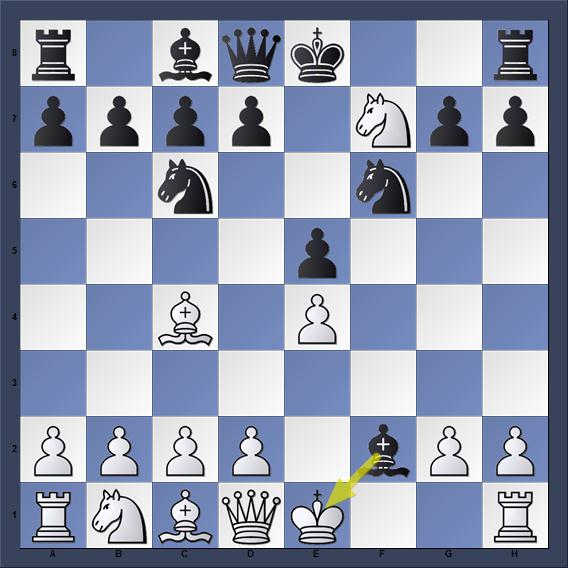
I played the Two Knights in an online game earlier this evening. It seems I’d forgotten all about the sharp Traxler Counterattack! Hardly anyone ever plays it but maybe they should! This write-up is for black but shouldn’t be too biased towards the second player. White will have a winning game if he makes perfect moves, but at any reasonable rating level there’s something to be said for pressure, pressure, and more pressure. The opening begins like this:

1. e4 e5 2. Nf3 Nc6 3. Bc4 Nf6 4. Ng5 Bc5?! 5. Nxf7 Bxf2+

I’ve never seen Fritz give a gambit such a lopsided evaluation! Still, it’s tricky and I lost the game. I probably would have fared better had I not fooled myself into thinking I knew the theory. The first option, and in my opinion the best try for white, is to not take the bishop at all. If someone prepares a gambit you know they’ve prioritized the lines where you accept the sacrifice. This enterprising move tries to restore normalcy. White wants to capture the h8 rook and hunker down with his extra material. He gives back his pilfering knight but wagers that his king can be protected. Black will get a passed e-pawn as a dangerous weapon, not to mention superior development.

6. Kf1 Qe7 (The only move. It offers a threat to white’s king if he goes for the loose bishop later. This also threatens Rf8 if white doesn’t capture the rook immediately. It’s a useful developing move that also functions as a way to force white’s hand. With every other try black will find himself down too much material to generate real chances.

7. Nxh8 (Now black can a) retreat his bishop or b) protect it with his queen.)

a) 7… Bb6 8. d3 d6 9. Bg5 (Black doesn’t control the f-file and pieces will soon be traded. White is safe for the moment. Black can try a kingside pawn advance to loosen white’s king.)

b) After 7…Qc5 I recommend 8. Qe2 for white. Black will play d5 shortly to activate his bishop and deprive white of his kingside light squares.

It’s less a chess game than it is a street fight; the longer the latter goes on the less your chances of coming out on top. However there is absolutely no intuitive way for white to know where to land his king. His seventh move, if inaccurate, will make defense impossible. 7. Kf1 was the beginning of the end for me and I didn’t even know it! Next time we’ll look at some other variations in this fun and interesting opening.


Floating in Space

Space, as it rolls and tumbles away between him and his native soil, proves to have powers normally ascribed only to time; from hour to hour, space brings about changes very like those time produces, yet surpassing them in certain ways. Space, like time, gives birth to forgetfulness, but does so by removing an individual from all relationships…

– Thomas Mann from The Magic Mountain

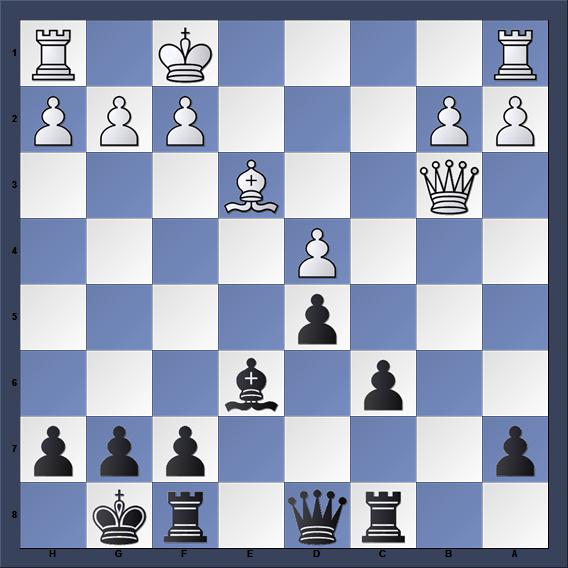
After black’s 23rd move.

I am white in a Game 60. My opponent is Thomas Mundell.

1. d4 Nf6 2. c4 d6 3. Nc3 g6 4. e4 Bg7 5. Nf3 O-O 6. Be2 Nbd7 {A minor error.
Black must expand with c5 or e5 while he can.} 7. O-O a6 8. e5 dxe5 9. dxe5 Ng4
10. e6 Nde5 11. exf7+ Nxf7 {I’ve played well so far, but now comes a
middlegame that I don’t particularly like. I am going into it with an
advantage and hope it will be more sizeable than my opponent’s ability to
outplay me.} 12. Bf4 {After the queen trade white’s claim to an advantage is
gone. It’s important to examine why the first player is better and then to
expand upon that. In this case it’s the vulnerability of black’s queen and his
hanging knight.} e5 13. Bg3 Bf5 14. Nh4 {Qb3 is clearly better. I ended up
concluding that the weakness on b7 didn’t merit a response from black. What I
failed to reckon with is that it might gain me a move later. The reason why
black can neglect the defense revolves around the proximity of his pieces to
that square and the weakness of b2. I can fix those problems later, with
tactics, and then win the b-pawn. Or at least create a threat to do so –
Qb3 had more bite than I supposed.} Ngh6 {I thought that this move was forced.
My opponent had an intermezzo to avoid it. Exchanging queens was the ticket.}
15. Qd5 {The queen exchange continues to benefit black.} c6 16. Qc5 {I’m
trying to exploit the b6 weakness. My opponent wants to thrust his e-pawn I
presume. I’ll need to blockade that now.} Ng5 17. Rad1 Qc8 {Obviously the
e-pawn is hanging. I didn’t take it because I (incorrectly) imagined that a
timely Re8 would win the the e2 bishop. It doesn’t. 18. Na4 {Now you see the point of the quote.

Both pairs of horse and rider find themselves on the margins. A knight
on the rim is often dim; less euphonic, but more accurate, is a knight on the
rim is removed from relations. The connections that make existence valuable,
and also make chess pieces powerful, are more easily severed than
reestablished. As time passes the cost of rebuilding these ties increases
fatally.} Ne4 19. Qb4 Nxg3 20. hxg3 a5 21. Qb3 Qc7 22. c5+ {Trying to create a
weak square for black on d6} Kh8 23. Rd6 b6 24. Nxb6 Rab8 25. Rfd1 Rbd8 26.
Nxf5 Nxf5 {While white is winning here the dark square bishop looks like it’s
going to be monstrous soon.} 27. Rxd8 Rxd8 28. Rxd8+ Qxd8 {In this endgame I
know I’ll need to be accurate. Black will have some counterplay if I’m not
careful. Perhaps I should have just played to extend the middlegame.} 29. Qa4
h5 30. Qxa5 {I think I took this one, an inferior choice, because I thought
I’d win the other with check at some point.} Qd4 31. Qa8+ Kh7 32. Qxc6 {I was
right! I was right! Before dancing in the streets I ought to consider how
terrible my 2nd rank is.} Nxg3 33. Bf3 {? Thinking that I’ll be able to snap
the knight off after e4.} e4 {The pawn is pinned. Black is now up.} 34. Qd6
exf3 {The knight is still floating in space.} 35. Qxg3 Qxc5 36. Na4 {Saving
the knight…better is to accept that I am running out of time and entered
into an endgame where I am qualitatively down a minor piece.} Qc1+ 37. Kh2 fxg2
38. Kxg2 Qc6+ 39. Qf3 {In the end black has to pause to figure out if the
knight is worth capturing. As it turns out it’s blocking the way to the
more-valuable pawns and gets captured. I resign here. Check out this game of Judit Polgar’s to see the theme expanded upon at a high level.


Redoing your Own Analysis

This is a thirty minute game in which I’m playing white. I am going through some of my old games to see how my analysis now compares to my analysis then. It seems to be a mixed bag. I make different mistakes than before, but there just as many gross errors. I recommend doing this to see how many moves from your old games you remember. Every game that doesn’t end in a draw has an inferior move in it somewhere. Don’t make the same one twice!

1. e4 c5 2. c3 {The c3 Sicilian is a good choice for white to avoid the Open
Sicilian. Unless you’re a professional chess player you stand a good chance of
having to discover a move in the latter that cannot be pieced together over
the board.} Nc6 3. Nf3 d6 4. d4 cxd4 5. cxd4 e6 {I enjoy a modest spacial
advantage. I do not have to attack black’s king and this setup has some
flexibility.} 6. Be2 {The bishop should go to d3 instead, a more active square.
Be2 is for attacking the king and defending a bishop on e3 against the king’s
knight.} Nf6 7. Nc3 Be7 8. Be3 O-O 9. h3 {d5 was also fine where the knight
gets ejected and I can control the c-file} a6 10. a3 {This is just a waiting move.
Although I know that this is no more correct than black’s last move, I want to
see how he’ll commit his pieces before I tip my hand.} Qc7 11. O-O b5 12. b4 {I’ve
decided to defer to black about how he’d like to strike in the center. I can
then choose to closer or open the game.} Bb7 13. Rc1 Rfc8 14. d5 {Wins a pawn}
exd5 15. exd5 {Nxd5 was an exceptional move that I did not see. The knight, at
the end of the variation, will be uncomfortable on c3. If white forces the
knight trade the newly won d-pawn is easier to defend.} Ne5 16. Nxb5 Qd7 17.
Nc3 Rc7 18. Bb6 Nxf3+ 19. Bxf3 Rc4 20. Qd3 {With the plan to trap the rook…
which doesn’t actually work.} Rac8 21. Bc5 {?} Rxc3 (21… dxc5 {! Even more
crushing} 22. Qxc4 cxb4 23. Qb3) 22. Rxc3 dxc5 23. bxc5 Rxc5 24. Rfc1 Rxc3 25.
Rxc3 Nxd5 {Allows me to win the knight. I have all the time I need to
reorganize. The dark bishop cannot help in the defense of the piece. The pin
will endure!} 26. Bxd5 {? Not noticing the strategic idea} Qxd5 27. Qxd5 {?
Thinking that I have an easy backrank mate.} Bxd5 28. Rc8+ Bf8 {! The two
bishops should be able to win easily.} 29. Rd8 {I plan to harass the bishop
vertically until it goes to b5, and then I’ll play a4, trading the pawns. I
feel more comfortable with the pawns all one side. Of course, if I keep these
pawns on the board I have double the chance to trade down to a wrong bishop
endgame…} Bc4 30. a4 f6 31. Rc8 Bd3 32. Rd8 Bc4 33. Rc8 Bb3 34. Ra8 Bxa4 35.
Rxa6 Bb5 36. Rb6 Bc4 37. Rc6 Bf7 38. Rc8 g6 {Black must break out of his box
to make progress} 39. f3 Kg7 40. Rc7 f5 41. g4 fxg4 42. hxg4 {I like fxg4
better in retrospect because I am not playing for a win. I’d like to deny
black a passer.} Bd6 43. Rd7 Bf4 44. Kg2 Kf6 45. Ra7 h5 {? =} 46. Ra6+ {Not
the best but a neat trap} (46. gxh5 {Speaking of wrong bishop endgames, here
we are! I forgot about my plan.} gxh5 47. Rxf7+) 46… Kg5 47. Ra5+ Kh4 48.
gxh5 gxh5 {? More than I hoped for!} 49. Rf5 Be6 50. Rxf4+ Kg5 51. Kg3 {
Perhaps black should try to put pressure on the f-pawn.} Bd7 ({Fritz 12:} 51…
Bd5 52. Rb4 h4+ 53. Kf2 Be6 54. Ke3 Bf5 55. Rb2 Bd7 56. f4+ Kf5 57. Rh2 Kg4 58.
Rg2+ Kf5 59. Rg5+ Kf6 60. Kf3 h3 61. Rc5 Kg6 62. Kg3 Kf6 63. Kh2 Bf5 64. Rc6+
Be6 65. Ra6 Kf7 66. Rb6 {1.83/22}) 52. Rd4 Bc8 53. Rd5+ Bf5 54. f4+ Kf6 55. Kh4
Bg4 56. Ra5 {It’s a better defense to move the bishop over and over. Allowing
me Kg5 makes my job easier.} Ke6 (56… Bd1 57. Kg3 Bg4 58. Rg5 Bd1 59. Kf2 Bg4
60. Ke3 Bd1 61. Rd5 Bg4 62. Ke4 Be2 63. Rd6+ {This is the only way. Notice how
white’s king and rook work together to deny black the diagonal he needs.}) 57.
Kg5 Kf7 58. Ra6 Kg7 59. Ra7+ Kf8 60. f5 Ke8 61. f6 Kf8 62. f7 {? Looks good
but the pawn will drop!} Be6 {?} (62… Kg7 63. Rb7 Be2 64. Rd7 {Using Zugzwang
} Bc4 65. Kxh5 Bxf7+ 66. Kg5 Kg8 67. Kf6 Bh5 68. Rg7+ Kh8 69. Rg3 Be2 70. Rc3
Kh7 71. Rh3+ Kg8 72. Re3 Bd1 {The king is in the right corner}) 63. Kf6 Bxf7
64. Rxf7+ Ke8 65. Rh7 h4 66. Rxh4 Kd7 67. Rh5 Kd6 68. Re5 Kd7 69. Re6 Kd8 70.
Re7 Kc8 71. Ke6 Kd8 72. Kd6 Kc8 73. Rd7 Kb8 74. Rc7 Ka8 75. Kc5 Kb8 76. Kb6 Ka8
77. Rc8# 1-0


The Value of Efficiency

Here is an unrated chess game I played against a player, “QuantumMan” on Chess.com. I play him regularly and score just over 40% in our games. We engaged in a a friendly debate about the value of efficiency in choosing a path to victory; it turns out we were both quite mistaken about the lines we picked in this instance, but, the fact remains that there is more than one way to win a chess game. Will you for the saucy method and accept a small risk of not getting the full point? Or will you play easy lines that don’t grind your opportunity into find power but guaranty, as much as anything can truly be expressed with certainty, that you will win the position? You’ll see from our game below that both actually carry implicit risks; the promise of positional power that your rook on the 7th rank grants may come to naught, but your calculations can also be your own undoing.

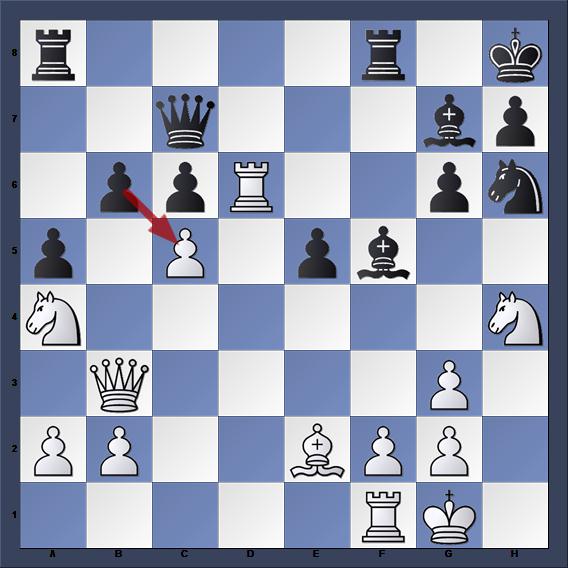
After our debate an engine revealed that not only was my idea for 30. f3 not a forced win, not in any line, but many of “QuantumMan’s” lines were fraught with opportunities for resistance. In fact his advantage was slight after move 32. His ideas were somewhat dependent on my screwing up, and I quickly obliged him when I played Bxh2. As white we would’ve both played our respective lines and won, as it turns out from the postmortem, but we overestimated ourselves. To calculate fifteen lines deep means not assuming your lines forced – in fact my flashy continuations meant nothing after some early deviations from black.

Human beings are terrible at assessing risk, and we might not be around if this were not so. Emerging from the  early Pleistocene Era wasn’t easy, and people subjected themselves to danger each and every day. Hunting sabre-tooth tiger with crude weapons is probably never a rational idea, and you’d be less inclined to do it the more you’d consider the idea. I personally don’t care if the world is covered in giant glaciers because I have automatic seat warmers, but I digress. What I want you to examine is which route you would have taken after black’s 29th. Remember, as novices we make the wrong move far more often than we make the right one; when we think of carrying our calculations out for fifteen moves we have to consider the possibility, usually a small one, that we’re actually right.

1. e4 e5 2. Nf3 Nc6 3. Bb5 Nf6 4. Qe2 Nd4 5. Nxd4 exd4 6. d3 c6 7. Bc4 Bc5 8.
Bg5 Qa5+ 9. Nd2 O-O 10. O-O d5 11. Bxf6 dxc4 12. Nxc4 Qb4 13. c3 dxc3 14. bxc3
Qa4 15. Bh4 Be6 16. Nb2 Qa5 17. d4 Bb6 18. Be7 Rfe8 19. Bb4 Qg5 20. Nc4 Bh3 {
? Qb5 was better, with the pin of the knight to the queen.} 21. Qf3 Bg4 22. Qg3
Bxd4 23. h3 Rxe4 24. cxd4 Rxd4 25. Bd2 Qc5 26. Be3 Be2 27. Bxd4 Qxd4 {White
has the subtle Nd6 where black can only get an exchange. He is losing.} 28.
Rac1 Bxc4 29. Rfd1 Qe4 30. Re1 Qd4 31. Rcd1 Qb6 32. Qe5 Be6 33. Rb1 Qa6 34. Qc7
Bxa2 {Anti-positional and terrible} (34… b5 {White must offer the pawn on a4
to keep his advantage, a tricky find. It was a key to the position neither of
us found.}) 35. Rxb7 Bd5 36. Rb8+ 1-0


The Autumn of the Patriarch

Over the weekend the vultures got into the palace by pecking through the screens on the balcony windows and the flapping of their wings stirred up the stagnant time inside, and at dawn on Monday the city awoke out of its lethargy of centuries with the warm, soft breeze of a great man dead and rotting grandeur –  Gabriel Garcia Marquez

Autumn of the Patriarch focuses on a leader’s last days; his life, once a blend of grand gestures and sensuality, comes to nothing but disorder. A cow holds court from the presidential balcony. The battlefield squalor inside the palace seems to embody the spontaneity of a coup, but even the dead dictator knows that gross misjudgments foreshadowed his difficulty. So regarding this incarnation of your king, what will be the true anatomy of his disaster as you will tell it later? Here’s mine. I’m playing against Justin Armstrong, 1670 USCF, in a Game 60. I am white and the text is below.

The Autumn of my Patriarch


1. e4 e6 2. c4 {An intriguing system that often leaves white no worse than ina normal French. Some choose not to play d5 at all and white keeps good chances. I also play the Maroczy Bind against the Sicilian. I like to play similar pawn structures.} c6 3. d4 d5 {E5 is good here. White gets a slightly better French Advance. The c5 break will take two moves for black. Black may have to take on the isolani as well.} 4. cxd5 exd5 5. exd5 Nf6 6. Nf3 Be7 7. Nc3 Nxd5 8. Bc4 {The wrong place for the bishop. Bd3 is thematic in such structures because e4 and c4 lack pawn cover. I’m hoping that black changes the pawn structure and would like to induce him to do so.} Bg4 9. Nxd5 (9. Qb3Bxf3 10. gxf3 O-O 11. Qxb7 {I failed to asses this as good for white. I am usually too paranoid to scoop up a b-pawn.}) 9… cxd5 10. Qa4+ Nc6 11. Bb5 Bd7 12. Ne5 Bb4+ 13. Kf1 Nxe5 14. Qxb4 Nc6 15. Qe1+ {It’s better to stay put. White will soon lag in development.} Be6 16. Qc3 {Yet another queen move. The lady is fickle.} O-O 17. Bxc6 Rc8 18. Qb3 bxc6 19. Be3 {The rest is immaterial. Bad governance has rotted the position from within. Multiple queen sorties and the arrogant king move leaves white struggling. Do not cause yourself problems you have no inkling of how to fix!}

There is some good news though. Like the composite rulers in the novel, the king seems to embody eternity, so does he rise from the box without wound or memory.

Scroll to Top