Uncategorized

En Passant

Today I found out that a good friend of mine, Michael Matz, passed away. We lost touch after I left New England and unfortunately the drift was permanent. He succumbed to cancer before I could get a chance to get up to New York City to visit. When we exchanged e-mails he’d always invite me up, but I let life get in the way. Then all of a sudden there was no more time. Mike didn’t play chess, but he did like the song “Da Mystery of Chessboxin’ by his favorite group, The Wu Tang Clan. I can still remember him drinking Rolling Rock and singing along with it on his CD player.  So that’s my chess tie-in for today. Some days the pieces don’t want to move, and they feel like they weigh five tons.

The game of chess, is like a swordfight

You must think first, before you move
Toad style is immensely strong, and immune to nearly any weapon
When it’s properly used, it’s almost invincible

Unfortunately, none us are invulnerable. No matter how hard your spirit is sooner or later you will lose the match. It’s what you do before that day that matters. When it comes time to attack a situation in your life don’t be heedless, but be fearless. I can remember Mike dropping out of college to work in an agribusiness. He wasn’t wearing a suit, he was hauling bags of fertilizer. It was good honest work and he loved it. Good on you buddy.

Raw I’m gonna give it to you, with no trivia

Raw like ****** straight from Bolivia
My hip-hop will rock and shock the nation
like the Emancipation Proclamation
Weak MC’s approach with slang that’s dead
you might as well run into the wall and bang your head
I’m pushin’ force, my force your doubtin’
I’m makin’ devils cower to the Caucus Mountains

There’s more than one approach to everything. If you seem to have only one option use everything inside of you to find a better approach. Early on his college career Mike got put in the exact wrong dormitory. He was a shy kid and, though he was a black belt, the things these Rock’ N Jocks said to him bothered him a lot. Without forcing them to stop, or even just deciding to take it, he continually used a sense of humor to diffuse whatever situation presented itself. It was quite a trick. I know I would have reached the boiling point. The trick of chess boxing  is to parry enough to make your strikes more effective. When he fired back with his wit he made those kids  respect a shy kid from New York with big glasses. Not bad at all.

Don’t talk the talk, if you can’t walk the walk

Phony ***** are outlined in chalk
A man vexed, is what the projects made me
Rebel to the grain there’s no way to barricade me
Steamrolling ****** like a eighteen wheeler
with the drunk driver driving, there’s no surviving

You can cultivate a presence, working the board or walking down the street, that lets everyone know you’re serious. You can use your own flaws to your advantage. If you aren’t the most popular kid in the yard hit the books and become something great. That’s what Mike did. A renegade intellectual and a free spirit I bet he would have been a confident, savvy chess player.
[Verse Three: Raekwon the Chef]
Rough like Timberland wear, yeah
Me and the Clan, and you’re the Landcruisers out there
Peace to all the crooks, all the ***** with bad looks
Bald heads, braids, blow this hook
We got chrome tecs, nickel plated macs
Black axe, ******* styles in phat stacks
I’ve only been a good ***** for a minute though
’cause I got to get my props, and win it you
I got beef with commercial-ass ***** with gold teeth
lampin in a Lexus eating beef
Straight up and down don’t even bother

Whatever you are or want to be it’s alright. You have the ability to live your life without kowtowing to other people’s expectations. Exceed each appraisal of your worth in positive ways that keep them on their toes. If they think you’re calculating three moves ahead show them you can dig deeper. Impress yourself before you worry about anyone else. Live each day like it’s your last.

Gotta get up, and be somebody!

Even your short life:

Looks like the work of a Master
Evidence indicates that’s it’s stature
Merciless like a terrorist hard to capture

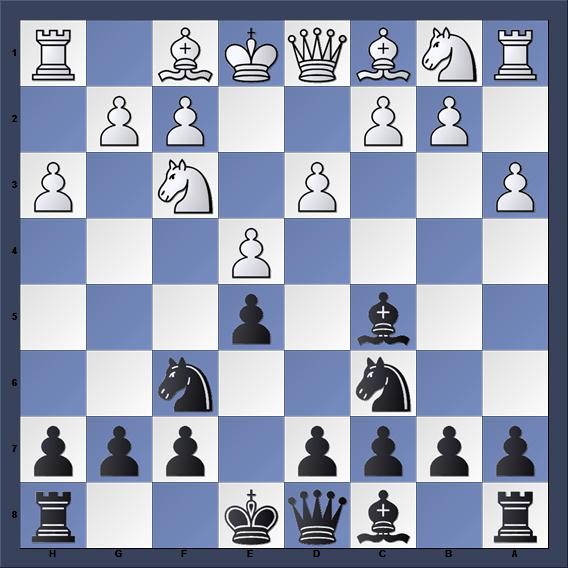
Chess as a Mode of Art: Part One

“Beauty in chess is closer to beauty in poetry; the chess pieces are the block alphabet which shapes throughts, and these throughts, although making a visual design on the chessboard, express their beauty abstractly, like a poem. Actually, I believe that every chess player experiences a mixture of two aesthetic pleasures: first, the abstract image akin to the poetic idea of writing; secondly, the sensuous pleasure of the ideographic execution of that image on the chessboard. From my close contact with artists and chess players, I have come to the personal conclusion that while all artists are not chess players, all chess players are artists.” — Marcel Duchamp, August 30, 1952 address to the New York State Chess Association

Duchamp’s 1911 Portrait of Chess Players probably says even more about our game than his speech. Take a look at it here on the website of the Philadelphia Museum of Art. Notice how the painting gives a shape to the inner world of the chess player. One can almost imagine how much pain they’re enduring. A chess friend of mine has to take an unhealthy dose of aspirin before competition because he would otherwise be overcome by migraines. He goes to tournaments where he spends hours mimicking mock battles between two armies. In a sense this is a singular act of will for no great purpose.

The artistry of the game rises in us from the desire to make sense of the chaos all around, and the overarching human need to do so. Without the desire to solve the insoluble problems the board presents, chess is just wooden men, and nothing more. This I concede. When, however, you begin to take what occurs over the board to heart, that is as a challenge to restore equilibrium, you invest in the game something that renders it an artistic sensibility.

By analogy I will tell you my favorite painter is Van Dyck. His portraiture, and especially his larger-than-life Christian-themed epics withstand the test of time. So important was his craft to him that he went on painting during the ravages of a plague. His mode of expression became to him more important than leaving Italy for safety. The world didn’t need another depiction of what plague looked like since life in the 17th century had no shortage of hardships. The important thing to remember is that Van Dyck himself felt compelled to continue.

So the next time you’re sitting over the board think about your own cognition. You can scoop up your pieces after the game’s first mistake and proceed with the rest of your afternoon if you so choose. Maybe the sun is shining or there’s a pretty girl waiting for you. I’m willing to bet that you’ll move your board outside if it comes to that, and tell your sweetie you’ll be a couple of minutes late. You’ve started something that has become more than just something.

When you started off your life you had nearly nothing in your neural web. All you wanted was a mother’s milk and a little companionship. Somewhere along the line, through selfish genes or something yet undiscovered, you became more than a clinging thing. You started to strive and work towards figuring out abstractions that on the surface make no sense. No other animal in the world can do what you do. No other thing in the world needs to spend its time resolving anything but the most basic of priorities. So it’s up to you. Chess and art intersect at a point of duty.


The Art of Balance

When I’m not dropping material at the chessboard or writing hack novels for no one’s consumption but my own I like to dabble in martial arts (read: get thrown across the room by more agile students).

There are actually quite a few similarities between chess and martial arts. Protecting your horizontal axis is just like securing d5 and e5, though failure to do the latter is punished somewhat more torturously, over the space of hours. The biggest benefit from the comparison however is insight into how people learn. A former instructor of mine, a docent one of the one-inch punch as well as a practicing physician, has an interesting idea. We must learn in a balanced fashion and devote equal attention to play, practice, and study.

Consider three chess players, each of whom ignores two of the three in favor of the mode he or she likes the most. The first, as experienced a competitor as they will become, cannot improve the aspects of his game that rely upon fine technical understanding.  He cannot learn the Lucena or Philidor Positions without knowing what they in fact exist. His brain is constantly solving the same puzzles again and again because it has no systemization to its thinking. The online blitz specialist is a good example of this type of player.

The second player practices his openings, his endgames, and you can find him sitting evenings in front of the board, whipping his army into shape. His openings will become finely tuned and he can rely upon rote memorization to get him through the opening. He will probably turn to the Colle System or some such thing to obviate the need for study. Still, if he does not subject himself to the rigors of competition he can never become fearless. He must test his nerves over the board. He must figure out what to do after getting in his e4 push. How can he know how to make four quality moves in ten seconds to get to his next time control?

I identify with the third player. I have spent many hours with Fine’s Basic Chess Endings interpreting, plotting, learning silly rules and even sillier exceptions to the same. However, because I rarely play I am not nearly as attuned to the psychological aspects of the game as I otherwise could be. I leave many things on the table, such as the ability to discern my opponent’s plan in order to let him execute only the first half. Most importantly the one who does not play sees his love of the game wither.

Today’s lesson is to periodically remind yourself why you own a board and pieces. Today is a calculation-free day. Find a friend, take out a board, and get to having fun!

The Glutton: Greed is an Awful Vice

You don’t have to take every juicy pawn or delectable piece your opponent offers you. The old adage “the best way to refute a sacrifice is to accept it”  is only a guideline. Every gambit of your opponent needs to be examined fully, in both positional and tactical terms. Even if your opponent is wrong in giving up material you need to know how to refute his offer. If you can’t find the fly in his ointment don’t take the darned thing! Now I am afflicted with the curse of the pawn hunter myself, and this game is a great example.

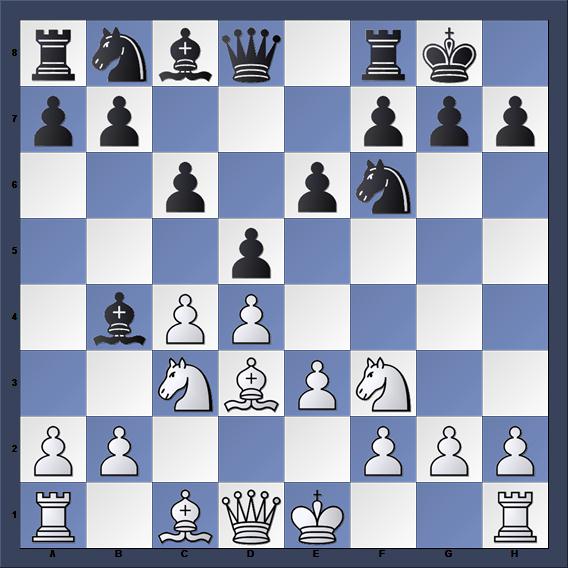
1. d4 d5 2. c4 e6 3. Nc3 Nf6 4. cxd5 exd5 5. Bg5 Be7 6. Qc2 O-O 7. e3 a6 8. Bd3 Nbd7 9. Nge2 h6 10. Bh4 c6

After 10…c6
We have a rather ordinary tabiya here from the Queen’s Gambit Exchange. This is the ideal piece placement for white and black hasn’t done anything wrong either. We’re still in book. The move a6 is strange here, but not wrong for black as he often plays later in response to white’s minority attack, securing himself an open rook file. Black doesn’t understand the basics of the position from here on out (he needs to play on the king side), but as it turns out my desire to gobble material undoes me anyways.
11. O-O b5 12. Bxf6 Nxf6 13. e4 Nxe4 14. Nxe4 dxe4 15. Bxe4 Kh8 16. Bxc6: Believe it or not I didn’t see that the knight could recapture. I planned to deflect the bishop and then play b4 where the c6 pawn would be permanently backward. This oversight gave black equality.
16…Ra7 17. Bf3 Bd6 18. d5 Qh4 19. Ng3 Bd7 20. Rfe1 f5 21. h3
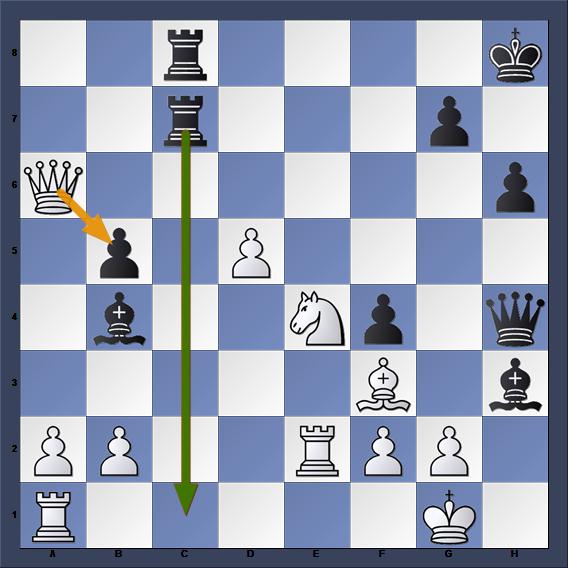
f4 22. Ne4 Bf5 23. Qc6 Bb4 24. Re2 Rc8 25. Qb6 Rac7 26. Qxa6 Bxh3
After Black's 26th

27. gxh3?! Qxh3: I didn’t even consider letting the bishop sit there. As it turns out capturing was objectively the best, but I had no idea how to defend the position that emerged. So in effect I gambled that I could take the piece and survive. Notice how my greed is hurting me again and again. I displaced my queen earlier to nab a rook pawn. This allowed black major piece activity earlier and is the reason he’s still in the game. Now I decide to wing it.

28. Nc3 (28. Bg2 Rc1+ 29. Re1 Bxe1 30. Bxh3) 28… Bxc3 29. bxc3 Qxf3 30. Qxb5
Qg4+ 31. Kf1 f3 32. Re8+ Rxe8 33. Qxe8+ Kh7 34. Ke1 Qg1+ 35. Kd2 Qxa1 36. Qe4+
g6 37. Qxf3 Qxa2+ 38. Kc1 Rb7 39. Qe4 0-1

The Chess Composer: Part One

You’ve been playing a tournament game that has dragged on for way too long. You’ve grown weak and weary under unremitting pressure. Black has had you up against the ropes since the opening and seems to be two pawns up, enough so he’ll soon threaten a winning king pawn endgame. Before you congratulate your opponent on a hard-fought win let yourself take one last look at the board, but don’t think about chess while you do it.

Just enjoy what’s happened in the hours and minutes you’ve been exerting yourself. Think of the enormity of what has happened in terms of raw calculation. Look back on the enormity of the content of both your brains and its manifestation over the board. You’ve both had plans, counterplans, counter-counterplans. Probably the ones you discarded could themselves be the subject of a book. Whole campaigns of the flesh and blood variety have been brought to a conclusion with less effort. After all you have done in the name of sport don’t hedge in looking for every last positional resource. Maybe, just maybe, you can find yourself something for the ages.

A.A. Troitzky, maestro of the bizarre and absurd chess endgame puzzle, believed in the power of a last desperate sortie. His quirky and inspirational compositions continue to open up to new possibilities for the chess enthusiast. Today there’s going to be no analysis from Fritz to bail you out. You’re going to solve the problem below on your own, if at all. Call it tough love, call it cruel and unusual, but if you want the answer you’re going to have to find it the old fashioned way. I wrote the other day about the possibility of using generic plans when picking from a multitude of options. This is not one of those times.

White's Hidden Idea

Into the Deep: Part 1

As my chess mysteriously worsens I have started not to think in terms of wins and losses, but to steer towards interesting struggles on which I can blog. I prefer writing to chess anyways, if only because putting pen to paper allows a more controlled expression outlet. My mind is my own fiefdom, but in chess I have to account for the goals of the impresario across from me, or at the other end of a long and winding fiber-optic cable .

This change in perception comes on the heels of my realization that I am near the zenith of where I will go in chess.  Being 1500-something and having an irreverent blog is not the worst one can do in what is, after all, a game. I can almost picture old Semyon from Chekhov’s “In Exile” saying “Everyone should have such a life!”

To fulfill my desire for better games I have been seeking players much higher than my strength. The opponent who pummeled me in this instance had a rating of about 1600 USCF. I am white.

1. d4 d5 2. c4 c6 3. Nc3 e6 4. Nf3 Bb4 5. e3 Nf6 6. Bd3 O-O
Another Semi-Slav with Bg4. Could this time be different?
7. O-O a5: What does this move do? It’s different than dxc4, b6, Nd7, or Qc7 because it ignores the center. If it doesn’t assist in development or impact the center at least indirectly it’s usually a bad move. My plans should focus on seizing space and indeed they do.
8. Qe2 dxc4 9. Bxc4 b5 10. Bd3 Nbd7 11. e4 Bb7
White Seizes the Center
Black plays 11…Bb7 here. Look at the position. White has played mistake-free chess. Everything that has happened thus far is preparation for the moves to come. However to retain the initiative white has to play quite carefully. Black has no long-term problems and if white cannot put pressure on him the second player’s position will be fine. In other words white has no static advantages. Space is purely a dynamic advantage, and like a carton of milk it turns bad if you don’t use it.
Fritz has been kind of enough to point the way to victory with a red arrow.
12 Bg5 is simply a chess move and nothing more. It develops safely but is not part of a concrete plan to make the most of my assets in the position. Interesting enough I looked at the natural e5 and dismissed it.
Here is what I saw:
e5, Nd5, Nxcd5, cxd5 unclear (white actually wins a pawn)
e5, Nd5, Nxcd5, exd5 (the conditions are ripe for a classic bishop sacrifice on h7)
e5 Ne8 (Not considered)
e5 Nh5 (I don’t have a means to tactically punish the knight and I’ve made black’s bishop stronger)
frustration at not having a concrete continuation takes over at this point
White has the ability to gain long-term initiative in driving away a key defender of the king. Perhaps by pushing the pawn forward does lead to an inferior endgame against sound defense. So flippin’ what? I’m white. So next time I have to play like it.
The rest of the game is interesting and has a few unique features. It’s worth playing through if only to examine the merit of the exchange sacrifice near the end.
12. Bg5 Be7 13. Rad1 Ng4 14. Bf4 Ngf6 15. e5 Nd5 16. Nxd5 exd5 17. Qc2 g6 18. Bh6 Re8 19. g4 Nf8 20. g5 Ne6 21. h4
Nf4 22. Qd2 Nxd3 23. Qxd3 Qd7 24. Kh2 Bc8 25. Ng1 Qg4 26. Qg3 Bf5 27. Qxg4 Bxg4
28. Kg3 Bxd1 29. Rxd1 Bf8 30. Bxf8 Kxf8 31. Rc1 Rac8 32. Rc5 Re7 33. f4 Rb7 34.
Kf3 a4 35. Ne2 Rcc7 36. Ke3 b4 37. Kd3 Rb5 38. Rc1 c5 39. dxc5 Rbxc5 40. Rxc5
Rxc5 41. Kd2 Rc4 42. Kd3 Ke7 43. Nd4 a3 44. b3 Rc3+ 45. Ke2 Kd7 0-1

The Anatomy of a Mistake

I was all settled in my nice, comfortable chair ready to play everybody’s favorite game. Unfortunately my opponent had the raw temerity to present an interesting  chess puzzle as early as move five. I like the feeling of being certain about a move. The vague uneasiness of not knowing whether you’ve made an error can leave you in a weird limbo state. Some relish being on their own resources but chessboard aplomb is something on which I’m still working.

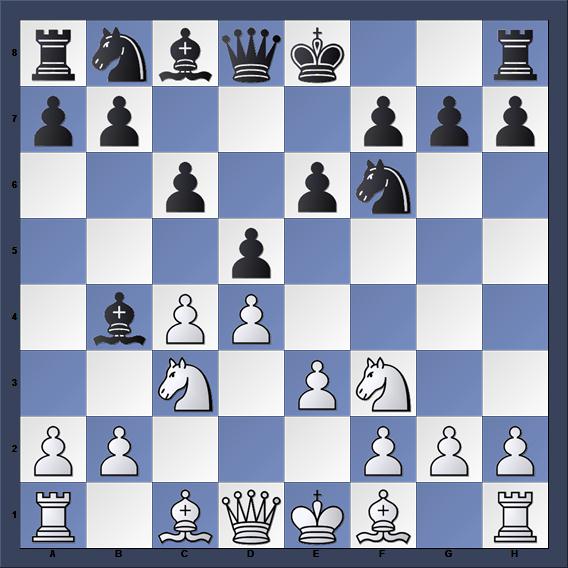
My opponent played 5…Bb4 in the Semi-Slav.

...5. Bb4 ? or !

I knew that it was an error. I didn’t get too jubilant though since I didn’t know how to categorize the error or to assess its size. All I could see was of a positional rather than a tactical nature. There were no hanging pieces attacked and black’s king was safe. I knew that dxc4, Bd6, and Be7 are the moves for black while he waits for a bishop move. I needed to know why 5…Bb4 was different. Fortunately I did figure it out after a few minutes. I arrived at my conclusions via some general considerations (in the following examples black is committing the snafu):

a) Some future position, one that we may or may not ever reach, will be at least slightly worse for the second player than if he had not played that move.

b) In certain continuations the error will actually improve the standing of black’s game! The window to punish the move may be wide or it may be narrow, but the results of the improvement could be crushing for white. In the position above white needs to know whether black’s pin is completely crushing. Is he free to guard against it in any particular fashion? Perhaps blocking the pin makes white worse! It isn’t so in this case but your choice to decide whether to parry or ignore the move may prove the the final verdict on whether the initial move ends up as a careless error or a savvy bit of finesse.

c) White must discern whether he has reached case a or case b! Unless white makes this determination accurately he cannot really know the strength of his opponent’s position vis-a-vis chess theory.

d) White must examine the impact of the move in all variations. The first player must calculate trees of moves both with and without the error. Thirdly white must know the ways in which a move can harm a position.

1) The move can block another, more critical piece from getting active

2) The move can result in a material exchange that’s unfavorable

3) The move can result in an uncomfortable pin, x-ray, or skewer

4) The move can abandon a diagonal, file, or rank

5) The move can make a combination of pieces more vulnerable than otherwise

6) The movement of a piece or a pawn can endanger king safety

7) The movement can affect a key square

This is probably not an exhaustive list. I’d be interested to hear your ideas about how you punish your opponent’s errors. Oh, as it turns out b4 wants to belong to a pawn. If you give Fritz 12 the position above it usually spends another move putting the bishop back to d6 or e7, even without a prompt.

Crazy Chess Ideas: Reverse the Board

This column idea came to me at the last second. I planned to go with the tried-and-true formula of sharing another mysterious loss. Don’t fret however, as I’m definitely not running out of last-second blunders and violent flurries of exchanges down to losing endgames!

Starting tomorrow I’m going to be begin employing a new training tool. I aim to change my perspective, quite literally by changing chairs. I will play as though I were my opponent, trying to checkmate me. I am not going to look at the board from my side. Naturally this works best with an obliging opponent since not everyone will enjoy you looking over their shoulder. Perhaps they will change seats too.

This is an easy way to train yourself in prophylaxis. If you never get into trouble, the worst you can expect is a pleasant draw. Let’s say my tactics have settled around 1550. On Chesstempo.com, a great site, I’m higher, but I think that’s due to familiarity with the mode of the test rather than overall strength. Can I say that I’m really that strength when often I consider only those moves I intend to make? Isn’t my tactical strength actually closer to a measly three-digit number since I’m using half of my capability?

It’s natural to look more closely at your moves than your opponent’s. Your pieces are nearer, and your pawns face the direction they want to go. The result of all this is a binary, almost Marxist, predisposition to march forward. That is one heavily-refuted theory, sorry Comrades! Don’t just move consistently down the line, heedless of the consequences. Use your opponent’s eyes to direct you.

Do you only see the Spanish opening as black? Take your blinders off and play it from the white side. Can you beat your own plan? A6 here means something very different when you’re white then when you’re black. How are your calculation trees different in evaluating this position from one perspective versus the other?

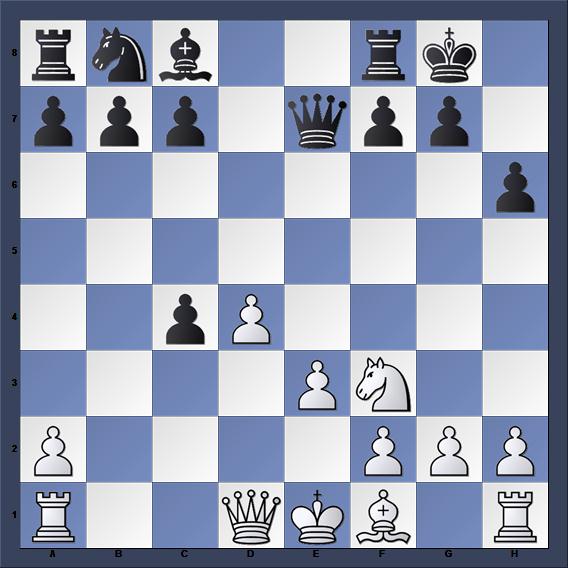
Before Black's Third Move

What happens if you want to learn theory past move twelve or thirteen?  Hardly any GMs use Lasker’s Defense, except as a drawing weapon, and therefore it is not very popular among amateurs. Although I love the positions that emerge I never have had to try to beat it. Perhaps in my first look at it from the white side I will better understand its fragility. I may abandon it all together, or redouble my efforts to make it a mainstay of my repertoire. If I can’t swat it aside as white then it’s safe to assume that my treatment with it as black is deficient in terms of plan quality. I will know what to study and finally accept that I can’t blame old Lasker for putting me into difficulties!

Lasker's Defense to the QGD after 12. dxc4

When you play h3 without a concrete threat in your face it looks like a stodgy, far-reaching idea. What does an unbidden, strange h3 mean to you when you see your opponent forgoing piece development?

A Thousand Tries: Part One

The title for this post could have been “Deja Vu”, or “Another Giuoco of a game” if  I’d been so inclined. The mood, at least chess-wise, is somber rather than clever however! This post is part of my ongoing quest to beat Fritz 12 at a high level of strength. Today I’m afraid I bring you further evidence of human frailty, and the results of it are predictable.
For your amusement I’ve recorded in the text the amount of time I took to make a move within the notation. Bear in mind the time control of the game was 90 minutes. You can clearly see by how quickly I moved that the imperturbability of my opponent affected me psychologically. The speed of my play here does not lend itself to the delicate balance of offense and defense required to win a chess game. A strong opponent usually manages to find quite a few creative puzzles for you to solve. It is one thing to reap a harvest of material but it is another to do while you have to assess their own, simultaneous threats. So what I want you to look at is you play through is:
a) White’s play, while imperfect, demonstrates the unnervingly consistent fighting style every human player should embrace. White is never winning or losing but simply engaged fully in the act of playing chess. The likely result is irrelevant.
b) When the position requires a shift in approach black is slow to adapt.
c) Tactical errors, both of commission and omission, impact the flow of the game.
d) Black is lulled to sleep by the maneuvering nature of the game.
e) Did I learn anything? Did you? In five years will we know the Italian Game deeper than we do now?  Are we improving or moving pieces?
These questions can’t be tackled all at once, but as we return to the game we will revisit them in the annotations. Content yourself with playing through the opening and sitting with the position after white’s fifth move. There’s a brilliant struggle unfolding and to compete in it you’ve got to understand the rules that govern it.
Fritz 12 (1650) -Giofreda 12 1580 (Game in 90)
1. e4 {0} e5 {2} 2. Nf3 {2} Nc6 {1} 3. Bc4 {1} Nf6 {5} 4. d3 {0} Bc5 {25} 5. c3: Many players express disdain for this typical opening position. White is simply going to play d4 and make a large claim to the center. He will push black’s bishop back to b6 in turn and have no more than a slight advantage.
After 5. c3
5…{0} O-O {24} 6. O-O {0} d6 {13} 7. Nbd2 {0} Bg4 {3} 8. h3 {0} Bh5 {4} 9. Re1 {0
} Na5 {25} 10. b4 {0} Nxc4 {2} 11. Nxc4 {0} Bb6 {5} 12. Bg5 {0} h6 {12} 13.
Nxb6 {0} axb6 {3} 14. Be3 {0} Qd7 {30} 15. Rf1 {0} Ra3 {12} 16. d4 {0} Bxf3 {22
} 17. Qxf3 {0} Rxc3 {6} 18. Rac1 {0} Ra3 {13} 19. dxe5 {0} dxe5 {4} 20. Rfd1 {0
} Qe7 {9} 21. Bc5 {0} Qxc5 {35} 22. Qxa3 {0} Qe7 {14} 23. f3 {0} Nh5 {9} 24.
Qc3 {0} Nf4 {5} 25. Qxc7 {0} Qxb4 {9} 26. Rc2 {0} Qa4 {53} 27. Rcd2 {0} Ne2+ {
10} 28. Kh1 {0} Ng3+ {2} 29. Kh2 {0} Nxe4 {9} 30. fxe4 {0} Qxe4 {1} 31. Rf1 {1}
Qb4 {35} 32. Rd7 {1} e4 {15} 33. Rdxf7 {1} Rxf7 {4} 34. Qxf7+ {2} Kh8 {2} 35.
Rd1 {3} e3 {17} 36. Rd8+ {4} Kh7 {4} 37. Qf5+ {5} g6 {2} 38. Qf7# {2} 1-0

The Silicon Beast

A chess engine is a wonderful opponent to have. It doesn’t care about your feelings or whether it’s ungentlemanly to expose every leak in your game all at once. Fritz unmasks you for the novice that you are in a German accent dripping with thinly veiled contempt. Except when it admits to despising you openly…
Despite my quick defeat there is still  a lot to learn. I made some very interesting and common mistakes.
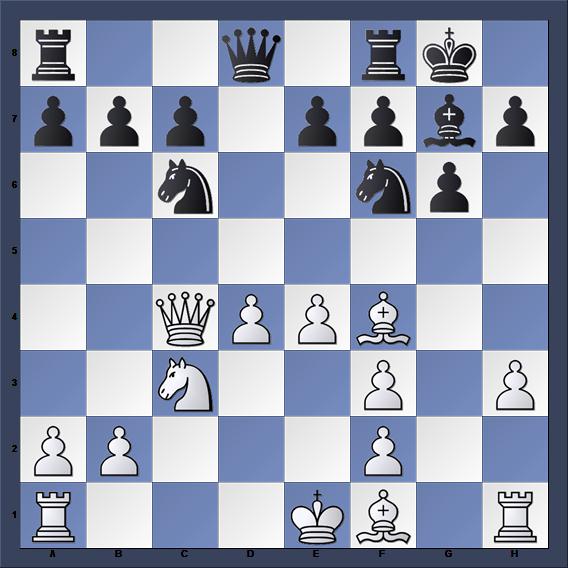
1. d4 Nf6 2. c4  g6 3. Nc3  d5 4. Nf3  Bg7  5. Qb3 dxc4 6. Qxc4  O-O  7. e4: So we’re halfway through the game already, and I have played these seven flawless moves countless times.  Like many a GM before me I plan to evacuate my queen when piece or pawn pressure forces it to retreat. I will get a nice center and c5 will take two moves. It’s not the technical refutation of the Grunfeld, but then again if there is one it’s a well-kept secret. Things don’t stay this rosy for long.
7…Bg4: This harmless seeking move takes me out of well-rehearsed lines. I feel like I’ve had trouble with it before, and even looked up the rejoinder to it. Of course it didn’t stick because I would have needed to understand the point behind it. It indirectly weakens d5, and will probably be paired with Nc6 afterwards. That much I get. However it is Nc6, or c6, or Nbd7, or even the eccentric Na6. Black could have played any of those moves but chose not to do so.
Rule number one: Think about what the past move didn’t do! Black didn’t attack b4 like he would have if he played Na6. Nbd7 would have eliminated the queen’s pressure on d5. So black thought his plan, whatever it is, was more important than fianchettoing his queen bishop with b6 and controlling the light squares. A devious and cunning opponent is going to throw a feint your way once in a while and try to conceal his intentions. To survive you must often ferret out the deception. You must understand what each move does and does not do. It may not be the best try, but you still have got to try to refute it.
8. Bf4: This move is correct. I assay black’s 7th move and determine that the bishop can develop with a tempo due to the weakness of the c pawn. I’m really hoping that c6 comes. I don’t know how to handle Nc6.
Rule Number Two: Assuming your opponent will comply with the move you want or expect can cost you a lot. I highly recommend Andrew Soltis’ The Inner Game of Chess which talks about unanticipated moves at length. Having the vanity to assume that your variation is the only variation is to be okay with constant surprises. That’s not planning! Lasker played inferior moves just to create puzzles. What if your opponent doesn’t know what the best move is? I soon have no idea what to do when my opponent counters my threat with a developing move and a threat of his own.
8…Nc6: Doesn’t black want to push his c pawn? This can’t be right, or can it? I can’t advance my center just yet because d5 is weakening. The g7 bishop will then become a monster. If I castle I have to live with a terrible pawn structure for the next thirty moves. I’m white, how come I have to make all of the hard choices? Whatever happened to the advantage of first move? I don’t know what to do. 9. h3 can’t be terrible and isn’t that the only thing left over? I won’t lose material after Bxf3 because of the pin on the knight (that’s not even close to true). White is guided by faulty assumptions based on a lack of understanding. I soon pay the price.
9. h3?: Believe it or not this move, the first ‘mistake’ of the game, is losing.
9…Bxf3  10. gxf3 Nh5: Please see rule number two! I also miscalculated and thought that I would win have counterplay no matter which piece took my pawn.

11. Be3 Nxd4 12. O-O-O e5 13. Nb5 c5  0-1

One mistake closely follows another. I won’t give you a picture as it will only further the embarrassment. Needless to say black’s knight and extra pawn are more than enough to claim a winning advantage.

Scroll to Top